
THE CHRONICLES OF
HER GRACE THE DUCHESS
-oOo-

-oOo-
 Truly, A Face To Launch a Thousand Ships
The Zombies – This Will Be Our Year
–oOo-

 The January Photograph of Her Grace The Duchess of Cumberland County
This photograph captures my first meeting with Her Grace upon her arrival at my house
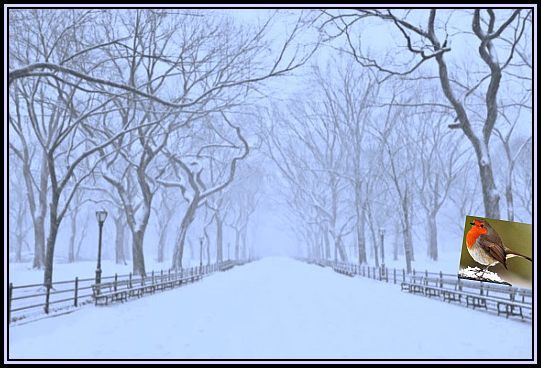
The Academy of St. Martin In The Fields – WINTER from The Four Seasons by Vivaldi
Sir Neville Marriner, Conductor & Alan Loveday, Solo Violinist
-oOo-
The first month of the year in the Julian and Gregorian Calendars is January (Latin, Ianuarius), which is named after Janus, the god of beginnings and transitions in Roman Religion and Mythology. The month has thirty one days and is, on average, the coldest month of the year within most of the Northern Hemisphere and the second month of Meteorological Winter. It is the warmest of the year within most of the Southern Hemisphere.
-oOo-



There are a number of days in January that have a particular significance: January the first, is New Year’s Day, the first day of the Gregorian Calendar Year. The Eastern Orthodox Church Eastern Orthodoxy, otherwise known as Eastern Orthodox Christianity or Byzantine Christianity, observes the first day of the New Year on January 14th (i.e., January the 1st according to the Julian Calendar).
Parties are held on New Year’s Eve which, perhaps, continue long into New Year’s Day. At at the stroke of midnight, it is custom for many in the English-speaking world to sing the song, Auld Lang Syne, a Scottish song with lyrics written by Robert Burns (1759-1796) in 1788.
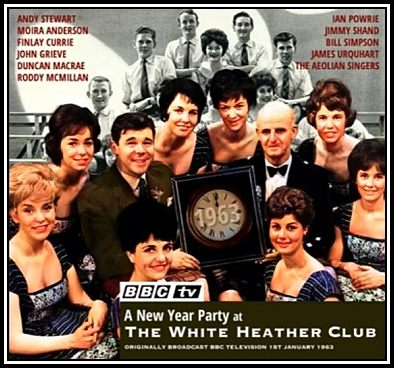
Andy Stewart (1933-1993) & The White Heather Club (1960) – Auld Lang Syne
-oOo-
Today most large cities observe the passing of the Old Year to the New with fireworks at the stroke of midnight. Other global New Year’s Day traditions include making New Year’s Resolutions, many of which are quickly broken!
-oOo-

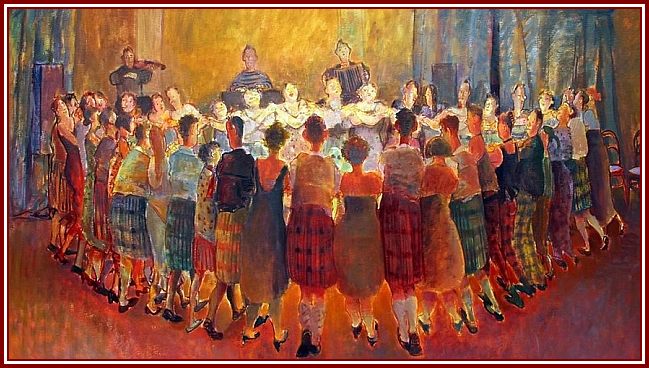
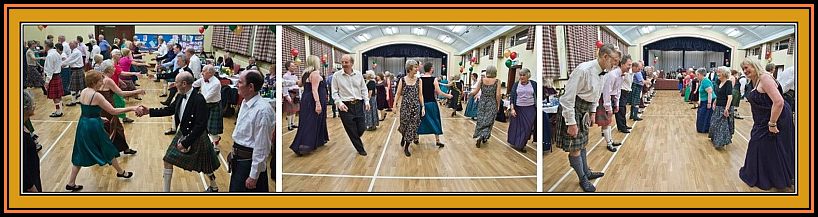
The last day of the Old Year in Scotland is called Hogmanay. It is normally followed by further celebration on the first and second day of the New Year. Celebrations include the giving of gifts, parties and visiting friends and neighbours with special attention paid to First-Foot …. and a wee dram or two!
Jimmy Shand (1908-2000) & His Band – Eightsome Reel
Jacobite Sword Dance (Medley) performed by The Gordon Highlanders
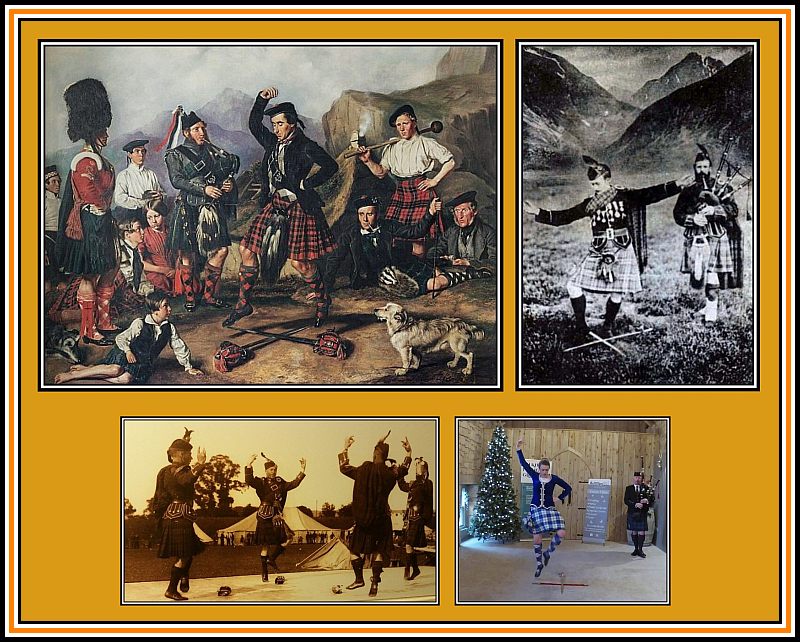 The Scottish Sword Dance (Ghillie Callum) is performed at prestigious New Year’s Eve events
such as the Hogmanay Gala Ball at The Balmoral Hotel in Edinburgh,
and at special events & occasionally at Cèilidhs
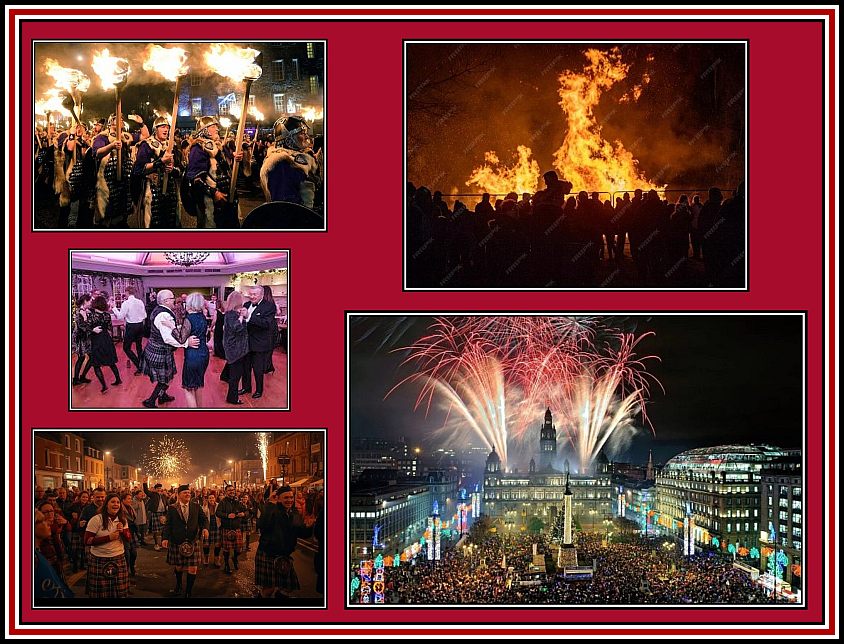 Hogmanay Celebrations
-oOo-

In Scottish, Northern English, and Manx (i.e., The Isle of Man) folklore, the First-Foot is the first person to cross the threshold of a household on New Year’s Day and is seen as someone who is generally a tall dark haired man who is not already in the house, and who comes bearing symbolic gifts such as a lump of coal, coins, whisky, shortbread and a Black Bun (a fruit cake covered with pastry). A First-Footer is considered to bring good fortune to the house for the coming year while fair-haired and red-haired people, bring bad luck. It is believed that the origin of this ceremony comes from the time of the Viking Invasion to Britain, where most of Vikings were fair-haired. A fair-haired stranger at the door suggested troubles and caused fear and alarm.
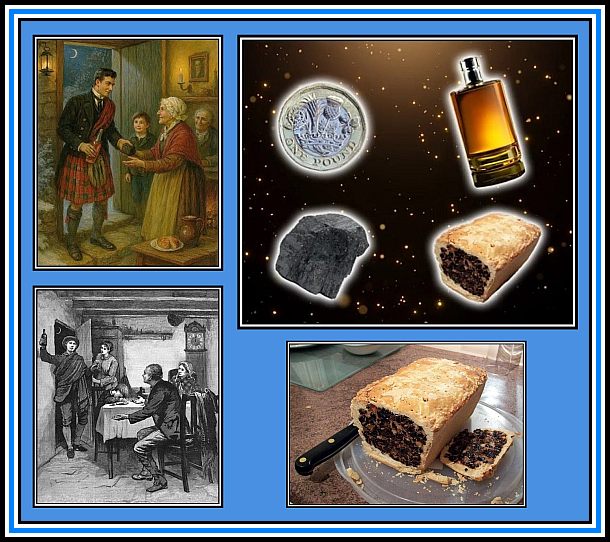 Top Right: Symbols of First Foot – Money, Whiskey, Coal & Black Bun
-oOo-
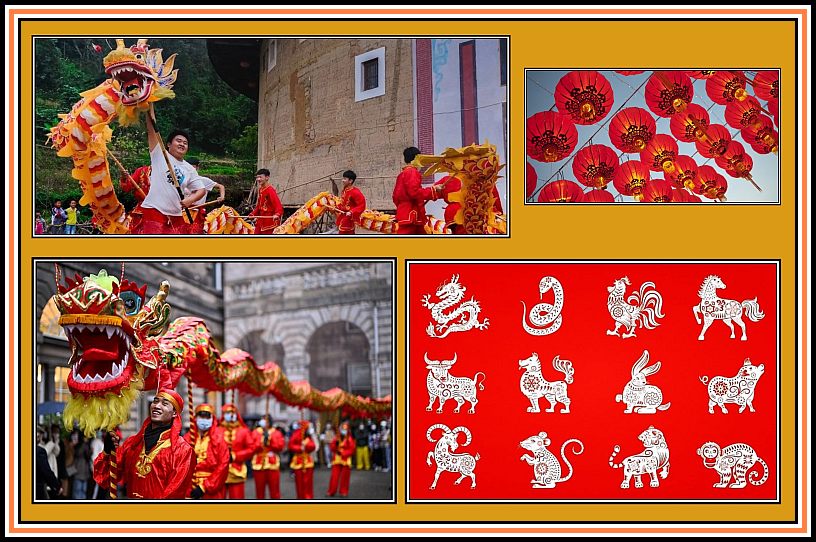
Not all people celebrate the day as the start of the New Year. The first day of the Chinese New Year (almost known as The Spring Festival) falls on the New Moonthat appears between the 21th of January and 20th of February . This year, 2026, New Year falls on February 17th, and marks The Year of the Horse.
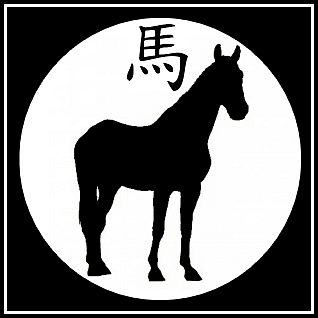
Rosh Hashanah (the Jewish New Year), is celebrated by Jews during September and October where the exact date is the New Moon of Tishrei, which is the seventh month counting from Nisan (the first month of Spring).

-oOo-

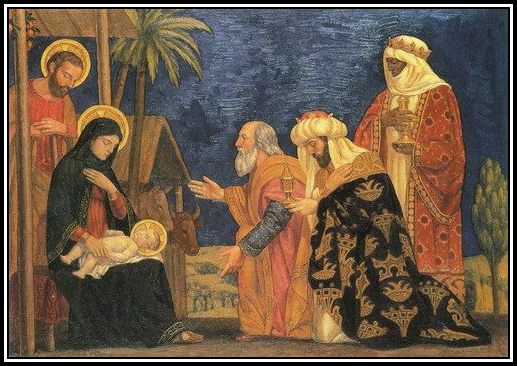
The Choir of Kings College Cambridge – We Three Kings of Orient Are
The Feast Day of Epiphany marks the end of the Twelve-days of Christmastide. It commemorates the Visit of the Magi (The Three Wise Men) and the Baptism of Jesus and is observed on January 5th or 6th (Gregorian Calendar) or the 14th (Julian Calendar).
 Photograph by Jim Monterey
The Wiggles – The Twelve Days of Christmas
The Twelfth Day of Christmas can be celebrated on January 5th, which is known as Twelfth Night. Christmas decorations are removed on either day, although nowadays, they disappear much sooner. The Feast Day commemorates The Visit of the Magi (The Three Wise Men or Kings) to the infant Jesus when they came bearing gifts. The Feast Day is associated with various traditions including the baking of a King Cake and merrymaking. It was once common for children to make paper crowns and wear them at this time.
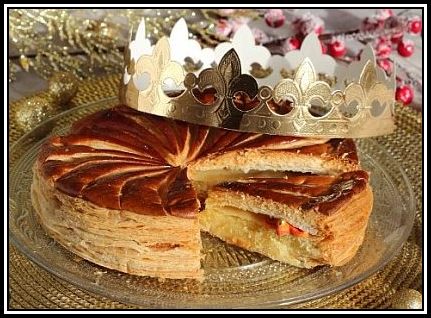 A King Cake & A Crown
-oOo- Theatre Royal Drury Lane
The actor Robert Baddeley ((1733–1794)) bequeathed three pounds per annum in his will to serve wine, punch and a Twelfth Night cake to the performers of the Theatre Royal Drury Lane in the Green Room each Twelfth Night. The tradition of serving the Baddeley Cake has remained a regular event ever since and missed only during war or when the theatre was closed.
-oOo-


Since 1983, The Third Monday of January is known as Martin Luther King Jr. Day and observed as a Federal Holiday in the United States. Its establishment was the result of a 15-year campaign advocating for a national holiday to honour the Civil Rights activist and Baptist Minister who was a leader of the Civil Rights Movement from 1955 until his assassination in 1968. The first official observance of the holiday took place on January 20, 1986. The Day has since become a day of service, encouraging Americans to engage in community service and reflect on Dr. King’s legacy.
-oOo-

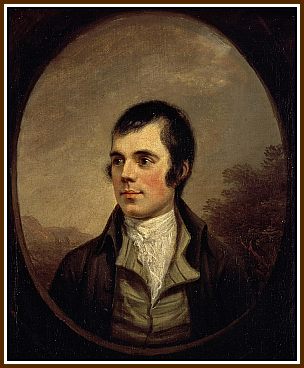 Robert Burns – painted by Alexander Nasmyth (1758-1840)
The Scottish poet, Robert Burns (1759-1796) was born in Dumfries in Scotland and is regarded as the National Poet of Scotland. Much of his writing is in a light Scots dialect of English, but he also wrote in standard English and is regarded as a pioneer of the Romantic movement. Burns wrote many poems which have been well received including Auld Lang Syne and My Love is like a red, red rose.
Kenneth McKellar (1927-2010) – My Love is Like a Red, Red Rose
Burns’ work and his life are remembered each year on his birthday by Scots and lovers of Scotland and Scottish culture all over the world with a special Supper, referred to as Burns Night. The Night consists of eating typical Scottish fayre including soup, usually Scotch Broth or Cock-a-Leekie. Following this the Centrepiece of the meal, a Haggis, is brought in while, if possible, a piper plays the Bagpipes. Haggis is a savoury pudding containing sheep’s pluck (heart, liver, and lungs), minced with chopped onion, oatmeal, suet, seasonings, and salt, mixed with stock and cooked while traditionally encased in the animal’s stomach.
The Host of the evening’s celebrations next recites the Address to a Haggis, a poem written by Robert Burns in 1789, and at the lines:
His knife see rustic Labour dict, An’ cut you up wi’ ready slict
a toast is then proposed to the Haggis. Mashed potatoes (champit tatties) and turnips (bashed neeps) traditionally accompany it.
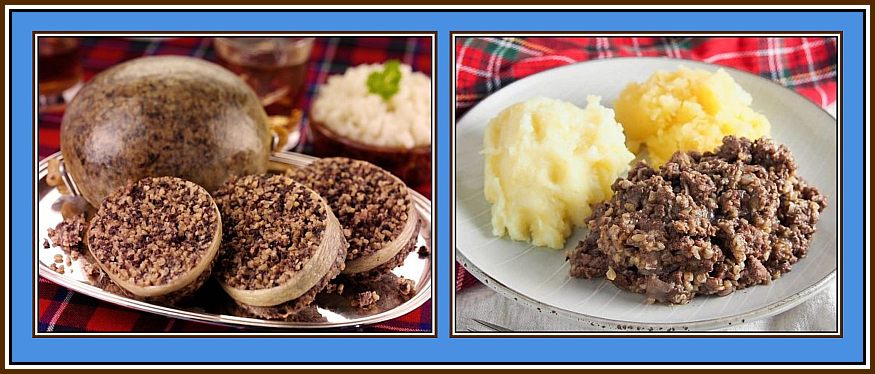 Haggis, Tatties & Neeps
Once the meal is over, one of the guests makes a speech commemorating Burns and proposes a toast, known as the Immortal Memory. A toast is then made to the lassies (women) in recognition of Burns’ fondness for them and sometimes a female guest will reply with a humorous toast to the laddies (men). Following the speeches there is singing of songs by Burns. At the end of the festivities, those present stand, join hands and sing Auld Lang Syne.
-oOo-
Robert Burns lived for most of his life in poverty and died in debt from Rheumatic Fever. He died on the same day that his ninth child was born. His poems were not widely read during his lifetime, but have since received recognition throughout the world.
-oOo-


International Holocaust Day is observed on January 27th and was designated by the United Nations in 2005 to commemorate the victims of the Holocaust (Hebrew: Shoah), marking the liberation on this day in 1945 of the notorious Concentration Camp, Auschwitz-Birkenau. Events are held each year to remember and honour the six million Jews together with the millions of other victims of Nazi persecution by promoting education and combating Antisemitism.
-oOo-

One last point regarding days of importance in January is regarding the Emancipation Proclamation. On January 1st, 1863, Abraham Lincoln (1809-1865) issued the Emancipation Proclamation, which declared that all enslaved people in states that were still in rebellion would henceforth be free. The Proclamation transformed the meaning of the Civil War (1861-1865) between the Northern and Southern States and turned the Union Forces of the North into an Army of Liberation. The Proclamation also allowed African Americans to enlist in the military and ~200,000 black soldiers and sailors eventually became involved in the War.
—oooOOOooo—

 The February Photograph of Her Grace The Duchess

February is the second month of the year in the Julian and Gregorian calendars. The Romans named the month Februarius, which from the Latin februum, meaning purification with the ritual, Februa, being held on February 15 at the time of the full moon. The month has 28 days in Common Years and 29 in Leap Years, with the 29th day being called the Leap Day. February is the third and last month of Meteorological Winter in the Northern Hemisphere, and the shortest month of the year.
 Her Grace The Duchess, beautiful no matter the month
-oOo-

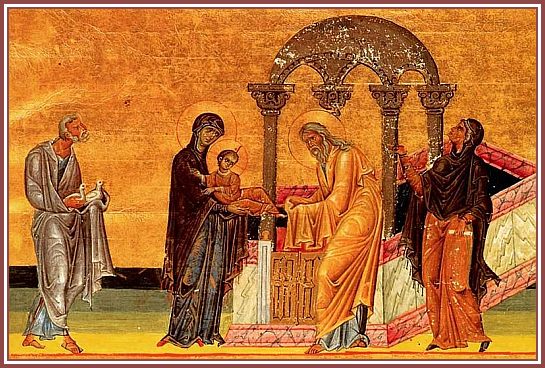 Presentation of Jesus at the Temple
There are a number of observances that take place in February that remembered throughout the month including: the Purification of the Blessed Virgin Mary. The Feast Day (known as Candlemas, The Feast of the Presentation of Jesus Christ, The Feast of the Purification of the Blessed Virgin Mary or The Feast of the Holy Encounter is observed on February 2nd and commemorates the Presentation of Jesus at the Temple by St. Joseph and St . Mary, the Mother of Jesus.
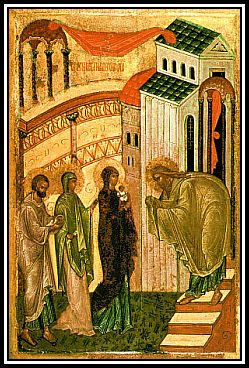 Meeting of the Lord, Russian OrthodoxIcon (15th Century)
-oOo-

February 2nd is Groundhog Day in the U.S.A. and Canada. This tradition derives from the Pennsylvania Dutch superstition that if a Groundhog emerges from its burrow on this day and sees its shadow, it will retreat into its den and winter will last for a further six weeks. Should the animal no see its shadow, spring will arrive early.

-oOo-

St. Valentine’s Day (lately known simply as Valentine’s Day) is remembered on February 14th (and by the Eastern Orthodox Church on July 6th). St. Valentine was a clergyman and a Roman Saint who lived in the third century and who ministered to persecuted Christians. He was martyred and his body buried on February 14th on the Via Flaminia, an ancient road leading from Rome over the Apennine Mountains to Ariminum (Rimini).
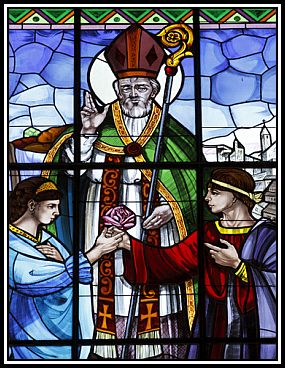 A Stained-Glass Window showing St. Valentine at The Basilica of St. Valentine in Terni, Italy
This day has been observed as his Feast Day since the eighth century. Saint Valentine was mentioned in the General Roman Calendar for celebration as a simple feast until 1955 when Pope Pius XII reduced all such feasts to just a Commemoration within another celebration. His liturgical veneration was removed from the General Roman Calendar in 1969 due to a lack of, and conflicting, historical information. He remains in the Roman Martyrology, meaning that he is recognized, and local veneration is allowed. However there are some, including me! who prefer to remember the day as The Feast Day of St. Valentine.
-oOo-

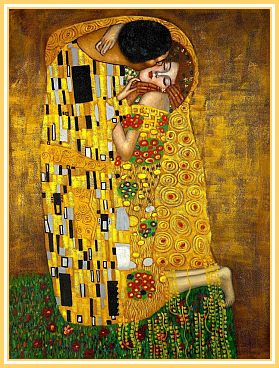 The Kiss – painted by Gustav Klimt (1862-1918)
Today, the 14th February is simply known as Valentine’s Day and has become linked with romantic love by association with the lovebirds of early spring. As a result, the month of February is known as The Month of Love! In 18th-century England, it grew into an occasion for couples to express their love for each other by presenting flowers, offering confectionery and sending greeting cards that came to be known as Valentines.
 An Assortment of Victorian Valentine Cards
Ella Fitzgerald – My Funny Valentine
-oOo-

President Lincoln’s Birthday is on February 12th and President Washington‘s on the 22nd. Remembrance of all Presidents has taken place since 1789 is now observed as a Federal Holiday in the U.S.A. as Presidents’ Day on the third Monday of the month.
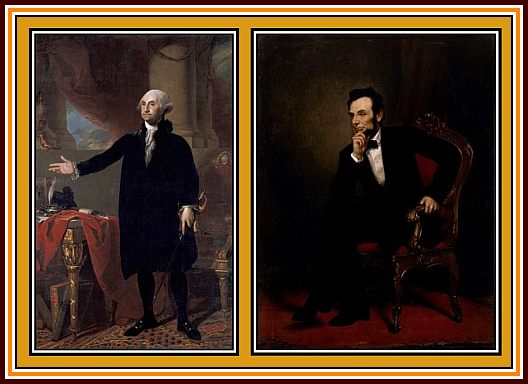 Left: George Washington (1732-1799); Right: Abraham Lincoln (1809-1865)
-oOo-

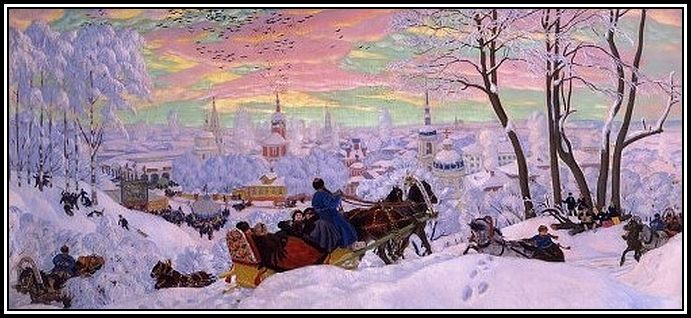 Boris Kustodiev (1878-1927) –Shrovetide (1916)
Shrovetide is the Christian liturgical period prior to the start of Lent that begins on Shrove Saturday and ends at the close of Shrove Tuesday which marks the end of the pre-Lenten season. Lent begins the following day with Ash Wednesday.
-oOo-
Shrove Tuesday is a day of reflection on sins that need to be repented prior to the start of Lent. The name Shrove comes from the old middle English word. Shriven. which means to confess and repent for the wrongs done.
Shrove Tuesday is also known as Pancake Day which comes from the old English custom of using up all the fattening ingredients before Lent, and so ready oneself to fast. Foods such as eggs and milk, which contain fat, are mixed with flour and turned into pancakes. Any meat left should also be consumed.
Pancake Races were once very popular in the U.K., a tradition that probably began in the mid-fifteen century. The most famous pancake race takes place at Olney in Buckinghamshire where in 1445 a woman ran from her home to the church and arrived with a frying pan still in her hand tossing its contents along the way in order to avoid sticking.
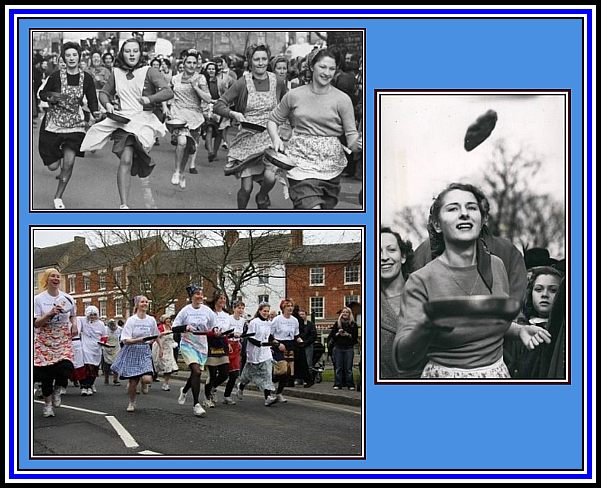 The Olney Pancake Race: Upper Left: in 1950; Lower Left: in 1974; and Right: the 1950 winner
Participants in the 415 yard–Race carrying frying pans run through the streets tossing pancakes into the air and catching them in the pan. The rules are strict and states that contestants must toss the pancake at the start and at the finish of the race and wear a scarf and apron! Some towns in the U.K. and the U.S.A. entered into a competition as to which town ran the race in the shortest time.

-oOo-

There are also a number of sporting events that take place on Shrove Tuesday in the U.K. that have a long history of taking place and many involve the rivalry between closely situated villages:
- Royal Shrovetide Football (Ashbourne, Derbyshire): A medieval football game played over two days (Tuesday and Ash Wednesday) where two teams attempt to carry a, usually, small, leather ball toward goals set three miles apart;
- Atherstone Ball Game (Warwickshire): An 800-year-old tradition played through the main streets of the town every Shrove Tuesday afternoon;
- Alnwick Shrovetide Football (Northumberland): Starts with the Duke of Northumberland dropping the ball from the castle battlements, often ending with a chaotic scramble in the River Aln;
- Sedgefield Ball Game (County Durham): Participants battle for a ball, aiming to dunk it in a local beck and then, tradition dictates, take it into a local pub; etc.
-oOo-
Shrove Tuesday/Mardi Gras was celebrated on Tuesday, February 17th in 2026.
-oOo-

In Roman Catholic societies, Carnival (from Carnelevare, meaning to remove meat) is celebrated. This is an annual festival held the Friday afternoon before Ash Wednesday with the Tuesday being known as Mardi Gras (Fat Tuesday). Parades are held together a great deal of revelry with the most famous occurring in New Orleans, Trinidad and Rio de Janeiro.
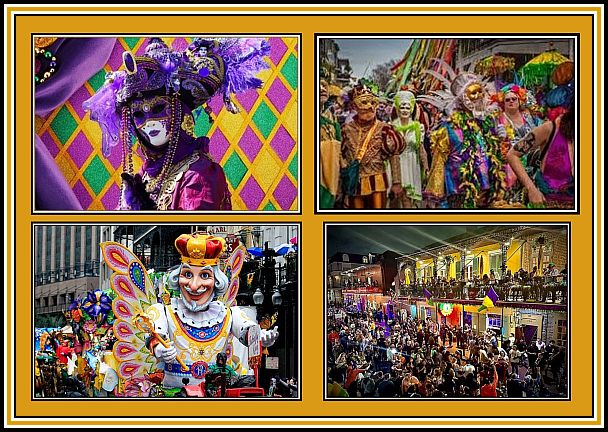 Mardi Gras in New Orleans
Carnival is the most popular holiday in Brazil and the country unifies completely for almost a week and festivities take place throughout the days and nights especially in the coastal cities. In Rio de Janeiro, São Paulo, and Vitória, huge official organized parades are led by Samba Schools. Brazilian Carnival is a fusion of European, Native American, and Afro-Brazilian cultural influences with the music played by the various Schools reflecting the Samba Rhythms of the various areas of the country. These parades are intended to be watched by the crowds while minor parades (Blocos) allow public participation.
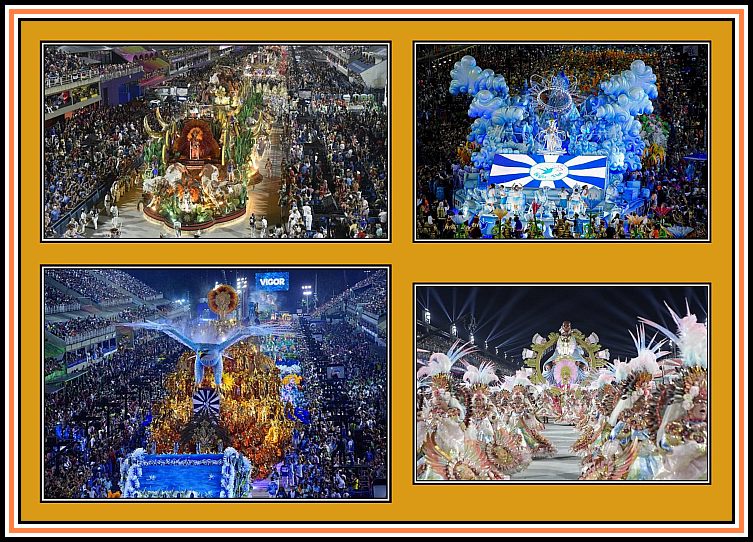 Carnival in Rio
A sample of Samba by one of the Samba Schools
-oOo-

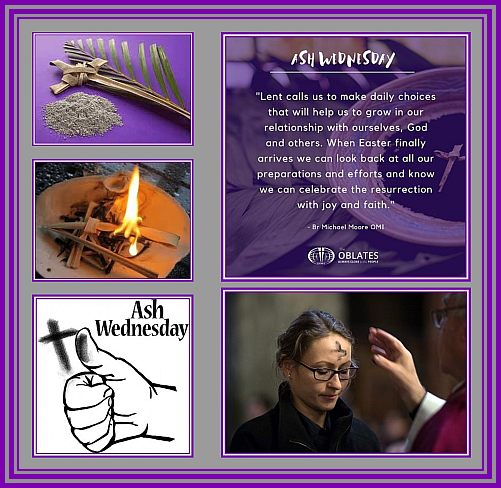
The day following Shrove Tuesday is Ash Wednesday marks the first day of Lent was observed in 2026 on Wednesday, February 18th. It is a Holy Day of prayer and fasting. Christians attend special Ash Wednesday church services where ash is placed on their foreheads or the top of their heads is considered to be a sign of repentance. Its placement is made with the sign of the cross to signify that the recipient is a follower of Jesus. The ashes are prepared by burning blessed palm leaves from the previous Palm Sunday celebrations.
-oOo-

The Period of Lent begins in February and continues into March and April for a period of forty days (forty-six including Sundays) and its exact time of beginning is dependent on Easter. In 2026, Lent begins on February 18th and ends of April 2nd.
Lent is the solemn Christian religious observance in the liturgical year in preparation and echoes the period Jesus spent fasting in the desert and enduring temptation by Satan. Self-reflection, simplicity and sincerity (honesty) are emphasised during the Lenten season.
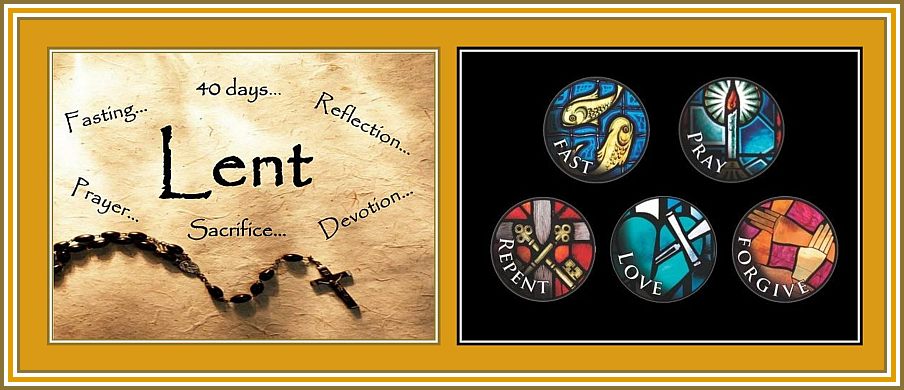
Lent allows the believer to prepare for Easter through prayer, fasting, and almsgiving (The Three Pillars of Lent), as well as mortifying the flesh, repentance of sins, simple living, and self-denial. During Lent, many Christians commit to fasting, as well as giving up certain luxuries in imitation of Christ‘s sacrifice during his journey into the desert for 40 days (i.e., Lenten sacrifice).
-oOo-

There are two additional dates in February that have some importance to me. The twenty-sixth of the month is the birthday of the great Antoine (Fats) Domino Jr. (1928-2017), who was to me the best Rock ‘n’ Roll singer/entertainer. I always felt that my dog, Casanova/Puppy used to appreciate his music, as he would wag his tail to beat of his tunes, and I always liked to believe that he was Fats Domino’s Greatest Fan!
 Fats Domino & His Band seen here in the film, Disc Jockey Jamboree (1957)
Fats Domino – Wait and See, as performed in the film, Disc Jockey Jamboree
-oOo-
I have also just learned that February 26th is NATIONAL POLAR BEAR DAY.
-oOo-
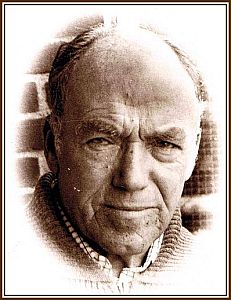
Finally, February 27th is an important day in my life, and especially when I was younger, for it is the birthday of my father (1908-1989).
-oooOOOooo-

 The March Photograph of Her Grace The Duchess of Cumberland County

March is the third month of the year in both the Julian and Gregorian Calendars. It was named after Mars, the Roman deity of war, and an ancestor of the Roman people through his sons Romulus and Remus.
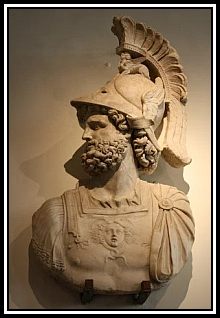 Mars
Mars
March has thirty one days, and weather-wise, in the Northern Hemisphere is a volatile transitional month, characterized by retreating winter cold and advancing spring warmth. It is generally known for having the greatest temperature differences between the warmest and coldest days of the season, which can often result in mild sunny days and late season snow or cold periods.
 At play on a cold March day
Julie London – Melancholy March
-oOo-
In the Northern Hemisphere, March 1st is the meteorological beginning of Spring with the March Equinox on the 20th or 21st marking the astronomical beginning of Spring.
 Her Grace The Duchess is ready for Spring
The Academy of St. Martin In The Fields – SPRING from The Four Seasons by Vivaldi
Sir Neville Marriner, Conductor & Alan Loveday, Solo Violinist
-oOo-
The Feast Day of Saint David
The first of March is the Feast Day of Saint David, the Patron Saint of Wales and is the date of his death in 589 AD. Saint David was a Welsh Christian Prelate who served as Bishop of Mynyw (Menevia) during the 6th Century. He was a teacher and preacher together with the founding of monastic settlements and churches in Wales, Dumnonia, and Brittany. St David’s Cathedral stands on the site of the Monastery he founded in the Glyn Rhosyn Valley of Pembrokeshire.
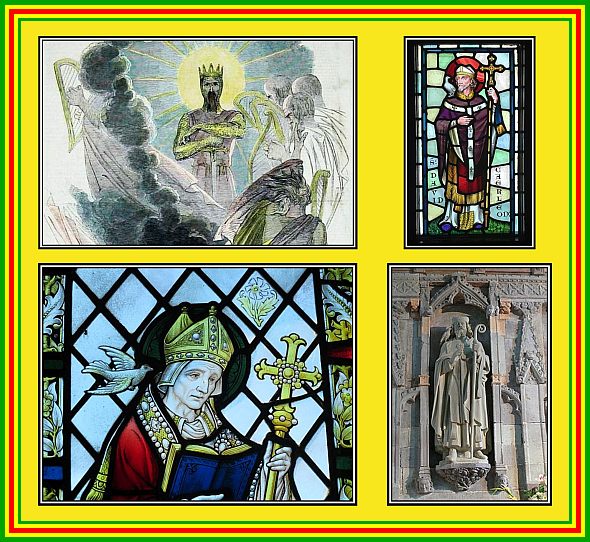 Depictions of Saint David
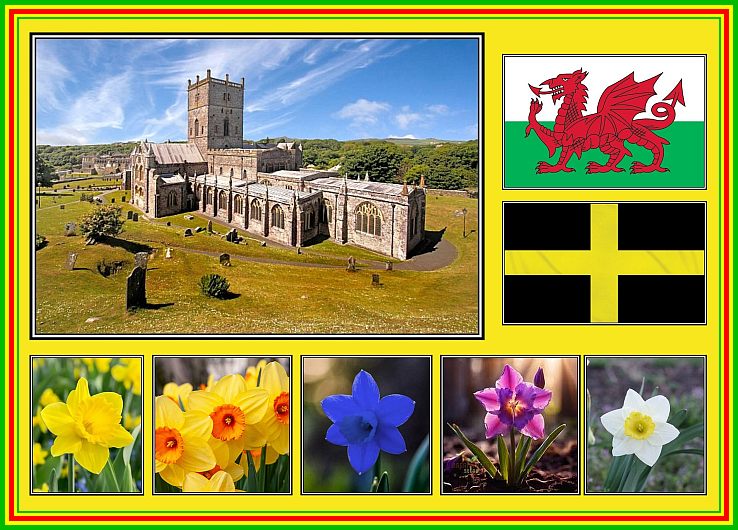 Top Left: St. David’s Cathedral; Top Right: The Flag of Wales;
Middle Right: St. David’s Flag; Bottom Row: The Daffodil, The National Flower of Wales
-oOo-
The Welsh National Anthem – Hen Wlad Fy Nhadau (Land of My Fathers)
Bryn Terfel with the Welsh National Orchestra conducted by Gareth Jones
-oOo-
Wales is associated a number of National Symbols including the Leek (Allium ampeloprasum), the Daffodil (Narcissus) and the Red Dragon (Welsh, y Ddraig Goch).
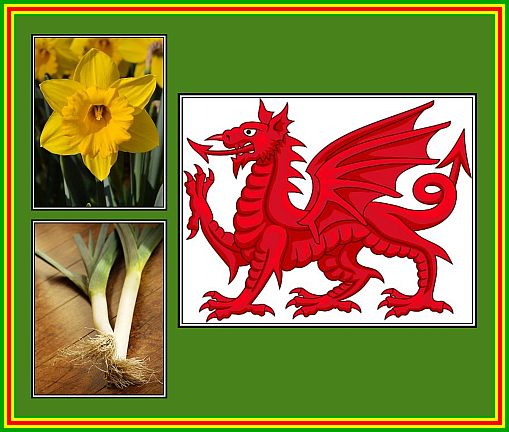 Welsh National Symbols
According to legend, St. David directed a group of Welsh solders to wear leeks on their helmets in a battle against the Anglo-Saxons where they triumphed against despite overwhelming odds. In 1599 when Shakespeare’s Henry V wore a leek at The Battle of Agincourt (1415) as a sign of solidarity with his Welsh bowmen. Today, every St. David’s Day, soldiers in Welsh regiments wear the leek as their cap badge.
Welsh association with the Daffodil appears to result from the flowers’ blooming around the Saint’s Day.
According to legend, Vortigern (Welsh, Gwrtheyrn) King of the Celtic Britons, whilst attempting to build fort at Dinas Emrys, St. David was told by Merlin/Ambrosius (Welsh, Myrddin) to dig up two dragons beneath the castle. While doing this, he discovered a Red Dragon representing the Celtic Britons (now Welsh) and a White Dragon representing Anglo-Saxons (now English). Merlin/Ambrosius prophesied that the Celtic Britons would reclaim the island and push the Anglo-Saxons back to the sea.
-oOo-
The Welsh are renowned for singing and poetry with many male voice choirs were once numerous throughout the land and there are a number of Eisteddfodau (Festivals) held each year celebrating Welsh culture. The main events of an Eisteddfod take place on the Maes or fields. Two of the most attended are:
- Eisteddfod Genedlaethol Cymru (The National Eisteddfod of Wales) is the largest of several Eisteddfodau that are held each year. The first such gathering was held in 1176; and
- Dydd Miwsig Cymru (Welsh Language Music Day) is a music festival and takes place in Cardiff.
Men of Harlech
Bryn Terfel with the Welsh National Orchestra conducted by Gareth Jones
-oOo-
The Feast Day of Saint Patrick
The 17th of March is observed as The Feast Day of St. Patrick (Irish: Lá Fhéile Pádraig). St. Patrick‘s (~385-~461) Day is both a religious and cultural holiday and commemorates St. Patrick and the arrival of Christianity in Ireland, and has also become a day for celebrating Irish heritage and culture which takes the form of public parades and festivals, Céilithe and wearing of green attire and/or shamrocks. Lenten restrictions on fasting and drinking alcohol are lifted for the day, which has encouraged the holiday’s tradition of merriment.
It is believed that St. Patrick was born in Roman Britain to a wealthy Romano-British family. His father was a Christian Deacon and his grandfather a Priest. At the age of sixteen, he was kidnapped by Irish raiders and taken as a slave to Gaelic Ireland where he spent six years working as a shepherd. It was during this time that G-d spoke to him and told him to flee to the coast, where a ship would transport him home. Upon his return, he studied and became a priest. He returned to Ireland in order to convert the people to Christianity and spent many years evangelising in the northern half of Ireland and converted thousands.
It is believed that St. Patrick died on the 17th March, ~461 and is buried on Cathedral Hill at Downpatrick Cathedral.
 Downpatrick Cathedral
The Shamrock is a flowering plant of the genus Oxalis (often Oxalis regnellii or O. triangularis), which produces small, delicate 5-petaled flowers in white, pink, yellow, or red.
The story of the Shamrock and its association with the Irish predates Christianity. The ancient Celts revered the number three as sacred, symbolising the cycle of life, death, and rebirth, and in so doing, St. Patrick used it to bridge old beliefs with new ones. He employed the Shamrock to teach about The Holy Trinity (The Father, The Son, and The Holy Spirit) thereby making the Three-Leaf Clover a symbol of faith and divine unity. It represents identity, spirituality, resilience and Irish tradition.
-oOo-

The March Equinox on the 20th or 21st marks The Astronomical beginning of Spring.
Jeanne Crain with the singing voice of Louanne Hogan – It might as well be Spring
from the film State Fair released in 1945
-oOo-
the
the
the
the
the
Fourth Sunday of Lent, 21 days before Easter Sunday: March 22 – Mothering Sunday.
Fifth Sunday of Lent: March 29 Passion Sunday
—oooOooo—