
THE CHRONICLES OF
HER GRACE THE DUCHESS
-oOo-
A VERY PRECIOUS GIFT

-oOo-
MAY
-oOo-
 Truly, A Face To Launch a Thousand Ships
Frank Sinatra & Nelson Riddle Orchestra – I’ve Got You Under My Skin (1956)
Composed by Cole Porter in 1936
-oOo-

 Her Grace enjoying a mid-afternoon nap in early May
The Grand Duchess always sleeps with one leg extended outside her bed – here it is the left!
-oOo-

-oOo-
This Sweet & Merry Month of May – The Cambridge Singers & Conducted by John Rutter (1945)
This is an English Madrigal composed by William Byrd (1540-1623) and published in 1590
-oOo-
-oOo-
And the flowers continue to bloom in the Merry Month of May including the Lilac (Syringa vulgaris) and Crepe Myrtle (Lagerstroemia indica). I am lucky enough to have three Crepe Myrtle bushes in my garden, one purple and two puce, but no Lilacs, I am very sorry to say. However my bushes do not bloom until about the middle of June. but when they do bloom, they are beautiful.
 Lilacs
Ann Ziegler (1910-2003) & Webster Booth (1902-1984) – We’ll Gather Lilacs
Written by Ivor Novello (1893-1951) for the musical Perchance to Dream (1945-1948)
 Crepe Myrtle
-oOo-
May is the fifth month of the year and has thirty-one days. It is named for the Greek Goddess, Maia. The month’s birthstone is the Emerald, which is representative of love and success. Flowers that are associated with the month are the Lily of the Valley and Crataegus monogyna (Common Hawthorn).
 Emerald – A Pseudo-Alum of Beryllium
-oOo-

The First of May (May Day) is celebrated with festivals that are of ancient origin and marks the beginning of summer and takes place roughly midway between the Northern Hemisphere‘s Spring Equinox and Midsummer Solstice.
Participants often gather green branches and wildflowers, as part of the Bringing in the May on May Eve, the night prior to May Day. The collected foliage is used to make into wreaths and decorate buildings. A young girl is crowned as the May Queen and often has a young male (Jack in the Green) beside her.
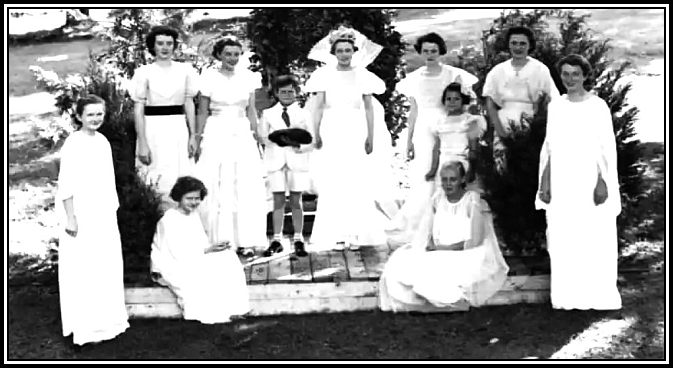 The May Queen & Her Attendants
A decorated Maypole or Tree (generally of ash) is set up for the occasion and revelers dance around it and often sing. Bonfires are also lit and there can be processions with the May Queen at their centres. The earliest record of the Maypole in the UK was in the 14th Century, and its popularity was well established by the turn of the century.
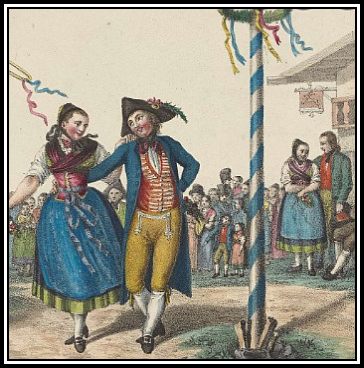
Pairs of boys and girls, as well as adults, stand around the base of the Maypole with each holding the end of a ribbon attached to the top of the pole. The boys move in once direction while the girls in the other resulting in the weaving of their ribbons around the pole. This is the dance in its simplest form, but there were some complex weaving patterns practiced at one time.
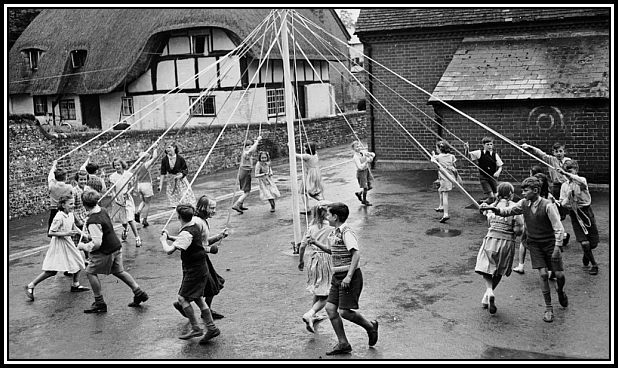 Dancing Around The Maypole
With the advent of Protestantism in the 16th Century, such activities as dancing around a Maypole was seen as a form of Idolatry and once Protestant Anglicanism was declared to be the state religion in England during the reign of Edward VI (born 1537; reigned 1547–1553), many Maypoles were destroyed. However when Mary I (1516-1568) ascended to the throne in 1553, she reinstated Roman Catholicism as the state religion and Maypoles and dancing resumed. However such practices have continued to be seen as Idolatry by some religious groups. Since Protestantism was still practiced in Scotland, Maypole dancing did not become a tradition there.
Will You Remember (Sweetheart) – Nelson Eddy (1901-1967)
From the Operetta (Maytime) & Films (1923 & 1937)
Music by Sigmund Romberg (1887-1951) & Lyrics by Rida Johnson Young (1869-1926)
-oOo-
At the beginning of the 20th Century, a tradition grew up in France to sell small bouquets of Lily of the Valley on International Labour Day (i.e. the first of May, May Day) by labour organisations free of paying sales tax for that day only as a symbol of spring.
I was lucky enough to work in Paris for a number of years during the 1970s. During this time, I remember seeing women selling small bundles of Lily of the Valley on street corners. When I asked was this to celebrate a special occasion, I was told that it was tradition for young men to bring their lady-loves a little bouquet of these flowers. No one mentioned the flower’s association with International Labour Day! I was working in a hospital laboratory at the time and their were a number of women working there as well. So I thought that it would be nice to give each one a small Nosegay of these flowers.
 Lily of the Valley
I recall that the lady selling the flowers was rather taken with my idea to bring female fellow colleagues such a gift, and for this, she gave me a rose. When I got to the laboratory, I distributed the flowers, but unfortunately, I was one Nosegay short. As a result, I gave the forgotten lady my rose. This lady was the supervisor of the junior staff and was not an especially pleasant woman. She was very flattered by the rose and behaved warmly towards me from then on. I later learned that the giving of a rose was seen as a wish to take our relationship one step further. I was not keen to do this and it took me some time to discourage her from the attention she showed me!
Now, what is the saying? No good deed goes unpunished!
-oOo-

The International Workers Day or Labour Day is a celebration of Workers, the Labour Movementand the Working Class and takes place annually on the first day of May or on the first Monday in May in a number of countries.
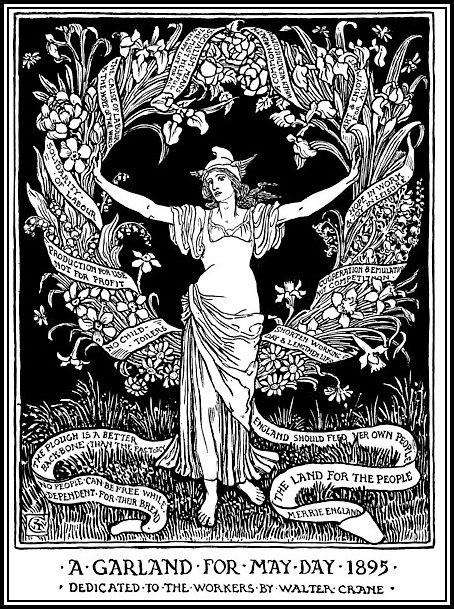
In 1890, The International Workers Congress voted to support a demonstration by demands for an Eight-Hour Day. May the First was chosen by The American Federation of Labor for the demonstration to commemorate the general strike that began that date in 1886 in Chicago in the U.S. and culminated in what has become known as the Haymarket Affair on May 4th. This was a bombing that occurred at a labour demonstration at Haymarket Square in Chicago where workers were striking for an eight-hour day. This resulted in the death of a number of people and a large number of wounded.
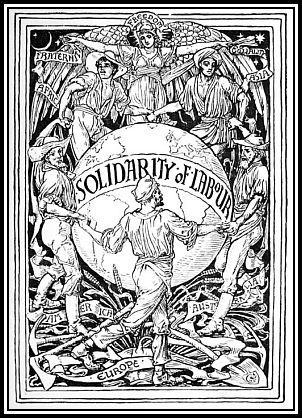 Celebrating The Solidarity of Labor – Designed by Walter Crane (1845-1915)
-oOo-
During the Soviet Era (1922-1991), the U.S.S.R. and the Eastern Block, International Workers Day was celebrated in every city and town with huge parades, the largest being that which took place in Red Square, Moscow. During the Cold War period, it became a military parade where the might of the State was shown to the world.
L’Internationale – Mandarin-Chinese Version
This piece of music was adopted as the Anthem of various Anarchist, Communist, Socialist &
Social Democratic Movements
-oOo-

The Eighth of May is an important date for a number of reasons including marking the end of The Second World War in Europe (VE Day), the birthday of Sir David Attenborough (100 years of age in 2026) and World Donkey Day.
-oOo-

Victory Day in Europe – VE Day notes the end of The Second World War in Europe and the acceptance of The unconditional surrender of Nazi Germany. The day is marked in Russia and some other former Soviet States on the 9th May since the surrender came into force at one minute past 11 o’clock on the 8th Central European Summer Time which was one minute passed midnight on the 9th in Moscow.
The day was celebrated in Europe, the Americas and the rest of the unoccupied world, but as the Prime Minister, Winston Churchill (1874-1965), noted at the time, war was still raging in The Far East.
-oOo-


Sir David_Attenborough (1926) is renown for his documentaries on the fauna and floral of the world. He has worked with the British Broadcasting Corporation (BBC) for much of his seven-decade career and resulted in the groundbreaking series which began in 1954 with Zoo Quest. Over the years, he made nine series including Life on Earth (1979), The Blue Planet (2001) and Planet Earth (2006) and became a global advocate for wildlife conservation.
In addition, Sir David was a Senior Manager at the BBC, a controller of BBC Two and Director of Programming for BBC Television in the 1960s and 1970s. In these positions, he was responsible for the making of a number of excellent series.
-oOo-

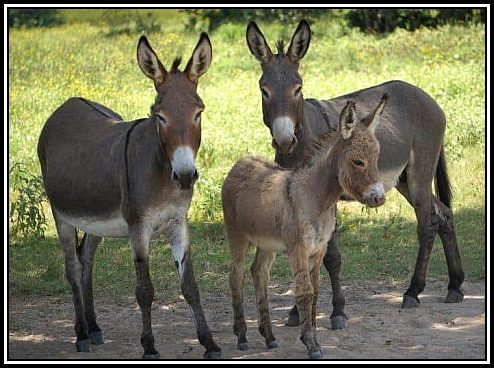 Equus asinus
There are apparently between forty-two and forty-four million donkeys in the world today. In 2018, World Donkey Day was introduced to both celebrate this wonderful animal and also to draw attention to their poor treatment at times. The vast majority of which are working animals in poor countries. Such communities would not survive without them, as they help sustain them, as they offer cost-effective labour.
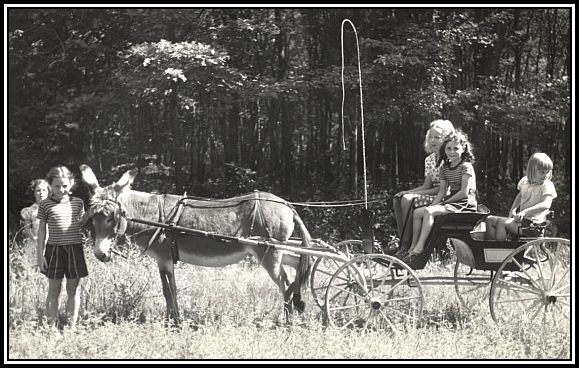
The donkey is the traditional beast of burden and has been carrying and pulling heavy loads for man including man/woman/child since Time Immemorial. It was the donkey who transported Mary to Bethlehem and Jesus into Jerusalem.
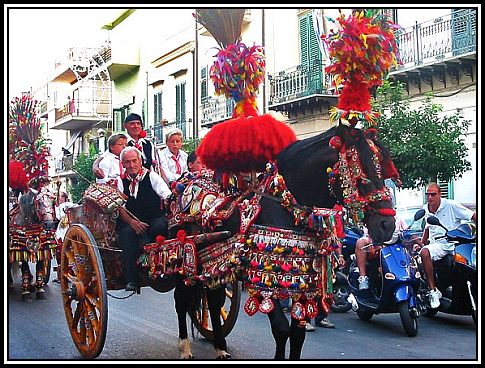 A Sicilian Donkey Cart
Mario Lanza (1921-1959) – Donkey Serenade (1937)
Music Composed by Rudolf Friml (1879-1872) & Herbert Stothart (1885-1949)
and Lyrics by Bubby Feyne (1913-1998) & George Forest (1915-1999)
Donkeys can carry approximately twenty to thirty percent of their body weight and can lose up to thirty percent of their body water without negative effects and are able to rehydrate rapidly. They can also undertake long treks, eat vegetation that other animals can not eat, and can cover difficult terrain horses and camels can not.
Donkeys have a reputation for being stubborn which is somewhat unfair as they are cautious, since they have a keen sense of preservation and will not go into areas of danger. They are not inherently defiant animals and learn from experience and it has been shown that they are capable of making independent decisions. Donkeys need time to assess and decide and then they will only go where it is safe.
-oOo-
There is a legend that tells of the Donkey that carried Jesus into Jerusalem. This Donkey wanted to help Jesus carry the Cross, but was sent away. Although deeply upset by the Crucifixion, the Donkey remained close by, and as he did, the shadow of the Cross fell across his back and stayed.
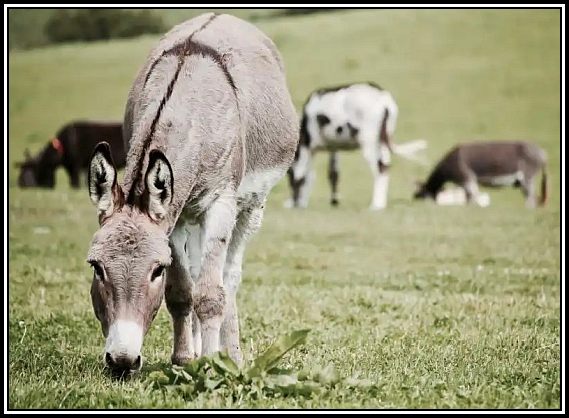 The Jerusalem Donkey
Jerusalem Donkeys are not a distinct breed, by a name given to Nubian and Miniature Mediterranean animals that have a dark cross across their shoulders and down their spine. They are good-natured and make ideal pets (I would love sufficient garden space to keep two – I would like two so that they could keep each other company!)
-oOo-
There is a number of organisations that are dedicated to seeing that Donkeys are treated well and also offer homes for old, ill and mistreated animals including:
Little Longears Miniature Donkey Rescue,
Peaceful Valley Donkey Rescue,
Naughty Donkey Farm Sanctuary.
-oOo-


Mother’s Day is a day to honour one’s mother and is observed on the second Sunday in May. and occurred in 2026 occurred on the 10th of May. The idea for such a day came from Anna Jarvis (1864-1948) and was celebrated with a church service at St. Andrew’s Methodist Church in Grafton, West Virginia on the 10th May, 1908. Since 1914, the day has been celebrated in Canada and later at many countries around the world.
-oOo-
 The U.K. observes Mothering Sunday in March and not Mother’s Day.
-oOo-
The singular Mother’s is used so that each person may honour their own mother and not the plural, Mothers‘ which would imply all mothers of the world.
The day is remembered with cards, presents, lunch in a favourite restaurant and family gatherings. Sadly, over the years, celebrations have been commercialised to a great extent.
-oOo-

The Feast of the Ascension celebrates the completion of Christ’s mission on earth and his entry into heaven. It is celebrated on the 40th day of Eastertide, and is always a Thursday. In 2026, it was observed on May 14th. The Ascension of Jesus recalled when Jesus ascended to Heaven after his Resurrection, where he was exalted as Lord and Christ and sits at the right hand of G-d.
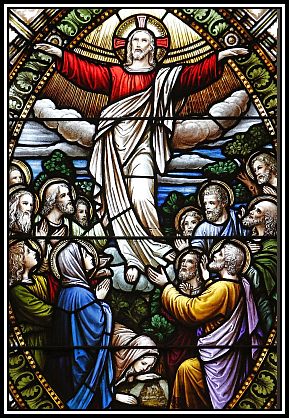 Christ’s Ascent to Heaven
A stained-glass window at St. Aloysius Church, Great Neck, N.Y.
The Tabernacle Choir – Hail the Day That Sees Him Rise – Written by Charles Wesley (1707-1788)
Ascensiontide refers to the ten-day period between The Feast of the Ascension and The Feast of Pentecost (Whit Sunday or Whitsun).
-oOo-

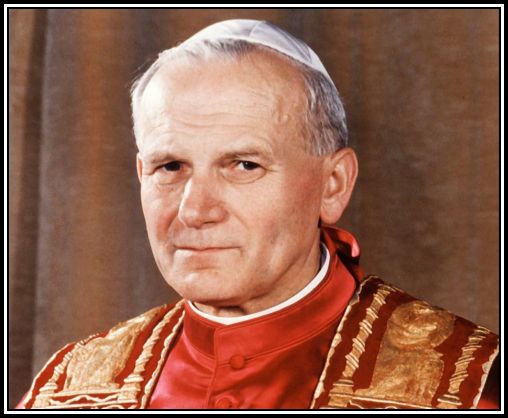
St. John Paul II (1920-2025) was born Karol Józef Wojtyła in the town of Wadowice in Poland. He was ordained a Priest on All Saints’ Day, the 1st November, 1946 and on the 28th September, 1958, he was ordained a Bishop. In January 1964, he was appointed Archbishop of Kraków and on the 26th June 1967, he was promoted to the College of Cardinals.
When Pope John Paul I (1912-1978) died after only thirty-three days as Pope, another Papal Conclave was convoked, which resulted in his election as the two hundred and sixty-fourth Pope. He chose to be known as John-Paul II in tribute to his immediate predecessor and also in honour of the late Popes Paul VI (1897-1978) and John XXIII (1881-1963).
Pope John Paul II died on 2nd April, 2005 after a long illness. He was much loved and respected by people from all walks of life around the world after having lived a life filled with many achievements.
His successor, Pope Benedict XVI (1927-2022), began the Beatification Process and bypassed the normal process of waiting five years after a person’s death before proceeding. Following the acceptance of the two miracles required, The Canonisation Mass for Pope John Paul II (and also for Pope John XXIII), was celebrated by Pope Francis (1936-2025) on 27 April 2014.
-oOo-
May the 18th is also a day to remember in my life, as it is the birthdate of a very dear girl friend of mine of my younger days. It is also the anniversary date of when I moved to the U.S.A. in 1980 – time flies by!
-oOo-

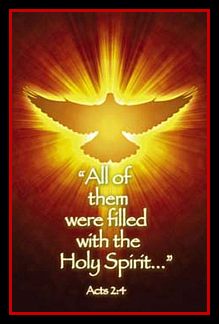
Veni Sancte Spiritus – A Baroque-style Hymn sung in Latin for Pentecost
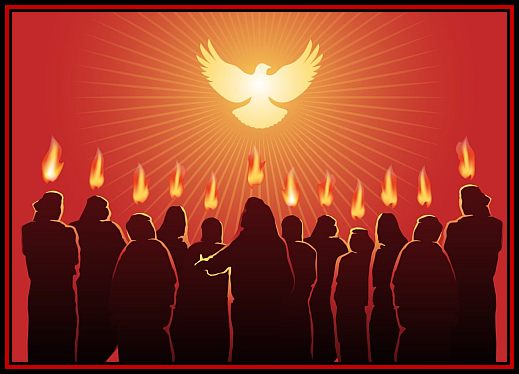
Pentecost is a Christian Festival that is occurs on the forty-nineth day after Easter and celebrates the descent of the Holy Spirit upon The Apostles, Mary (The Mother of Jesus) and others who were present in Jerusalem where they were celebrating Shavuot (The Feast of Weeks), as described in The Acts of The Apostles (Acts 2:1-31).
-oOo-
Pentecost is The Birthday of The Church and held a position second only to Easter. Its importance was considered to be even greater than that of Christmas, which has largely surpassed it in recent years thanks largely to commercialisation.
-oOo-
In the U.K. and a number of other countries, Pentecost Sunday is referred to as Whit Sunday or Whitsun. The name comes from the white robes historically worn by newly baptised Christians. It was also the custom for people to dress their children in new clothes at this time. who then took part in a parade (Whit Walks). Such a custom continued well in the 20th Century.
-oOo-
Whitsun marks the beginning of summer and has always been a favourite time for celebration. Such celebration includes fetes, fairs, parades and pageants with Whitsun Ales and Morris Dancing in the south of England and Whit Walks, Club Days and Wakes in the north.
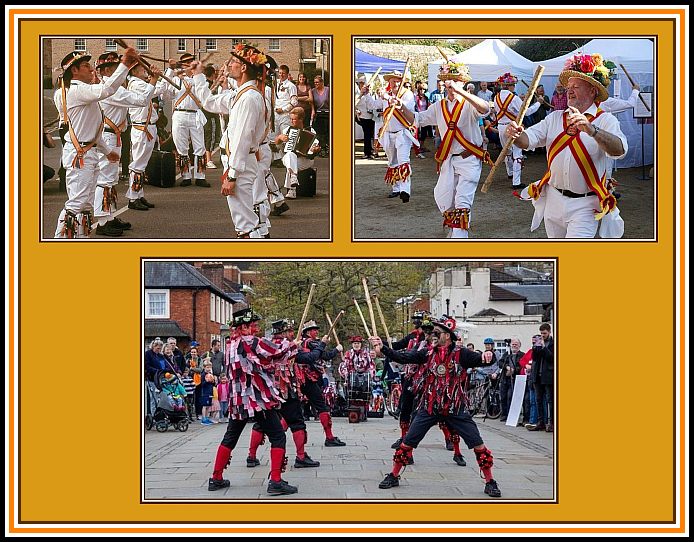 Morris Dancers
Classic English Fiddling Music for Morris Dancers
-oOo-
The following day, Whit Monday, was a holiday in U.K. until 1972 when it was replaced by a Spring Bank Holiday on the last Monday in May.
-oOo-

When I was a child and still living in London, each Whit Monday we would go to Regent’s Park in also to see the horses and carts. We did not know that it was called The London Harness Horse Parade! The Parade brought many horses and wagons together that were still used for making deliveries around London. The horses were decked out in all of their finery as were the drivers who wore specially designed uniforms of their companies. It was a magnificent sight to see.
I remember the horses from the Mann, Crossman, Paulin Brewery especially as they were housed in stables just across from where we lived at Mile End Gate. Every morning I would hear them leaving the stables. I used to run to one of the windows facing the road and watch these wonderful giants walking along the cobbled road pulling their huge wagons loaded with huge wooden barrels of beer that would be soon delivered to the many Public Houses around the East End of London. They made for a magnificent sight to see!
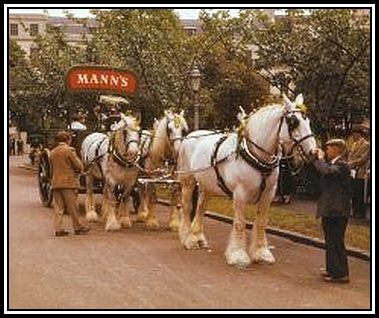 Mann’s Draft Horses Team
(Awaiting Permission to reproduce this photograph from The London Harness Horse Parade)
My mother was very fond of horses ever since she drove a team of Belgian Draught Horses and wagon for British Railways making deliveries around The London Docks during The Second World War.
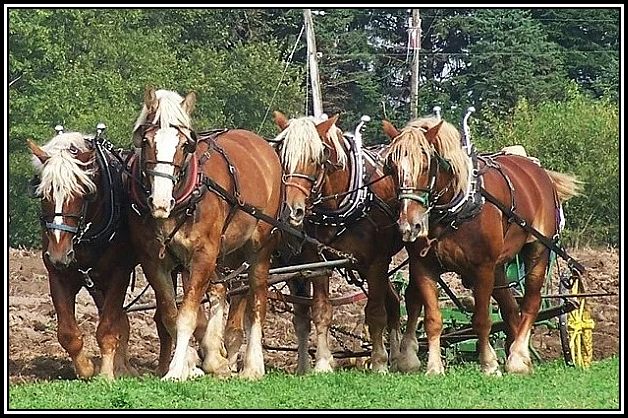 Belgian Draught Horses
-oOo-
The original intention of the Parade was improve the general condition and treatment of the working horses of London and also to encourage drivers to take an interest in the horses’ health. Battersea Park was the site of the first parade with a hundred and two entries.
The first Parade was held in 1885 in Battersea Park and attracted 102 entries, and in the following year, there were three hundred and eighty-three teams present. The Parade gained great popularity and was soon limited to one thousand entries until 1914. Sadly, with the replacement of the horse with motorised vehicles, the numbers taking part decreased over the years.
-oOo-
The London Van Horse Parade, which was founded in 1904, has been held every Easter Monday. In 1914, one thousand two hundred and fifty-nine teams. But again, sadly, thanks to more and more motorised vehicles taking over deliveries, the number of horse-and-cart taking part in the Parade diminished markedly.
As a result of the decreased number of entries to both Parades, they were amalgamated in 1966 to form The London Harness Horse Parade, which continues to be held on Easter Monday. The Parade still sees a variety of horse breeds present, including Donkeys, Dutch Friesians. Gelderlanders and Shires.
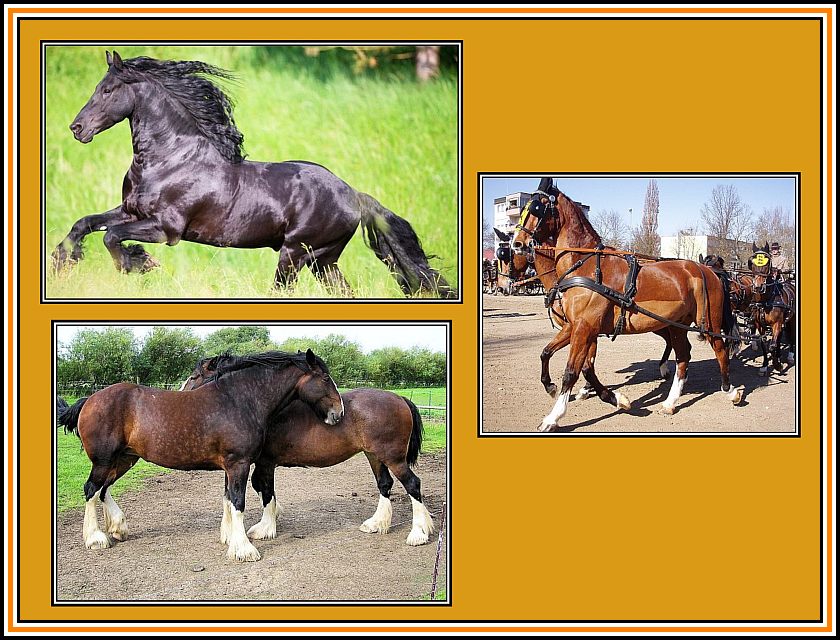 Top Left: Dutch Friesian; Bottom Right: Shire; & Right: Gelderlander
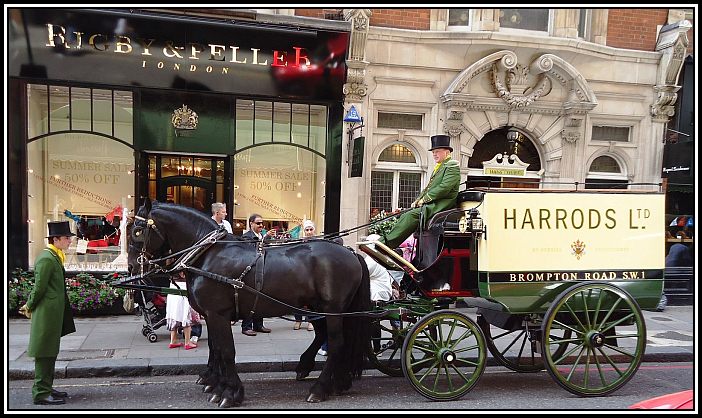 Harrods Horses & Cart
-oOo-
Today, the Parade is held at The South of England Showground, which is south of London at Haysward Heath, Sussex.
-oOo-

The Cooper’s Hill Cheese-Rolling Race took place every Whit Monday between 1836 until 1971 when it was moved to the Spring Bank Holiday (25th May, 2026). Here at Cooper’s Hill, in the village of Brockworth in the County of Gloucestershire, a Wheel of Double Gloucester Cheese weighing between seven and nine pounds is allowed to roll down the Hill and participants race after it down the Hill. The first to reach the bottom of the Hill, wins the Wheel.
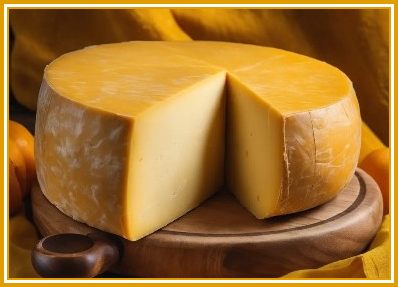
The Hill is nine hundred and forty-two feet high with a Slope of ~50 percent. The course is of 200 yards with many of the participants tumbling down to the bottom. Once only villagers took part in the race, but now entries come from all over the world. The origin of the race is unknown, but it is thought to be a Pagan festival celebrating the arrival of summer etc.
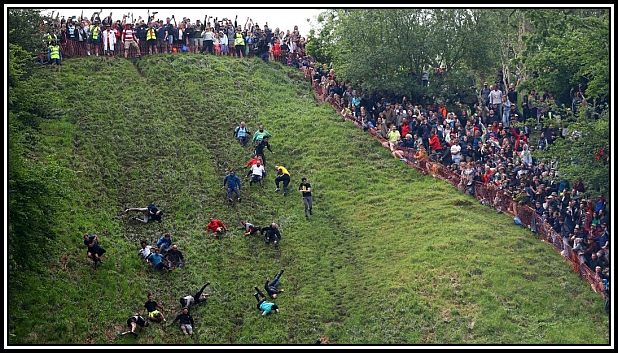 The Hill
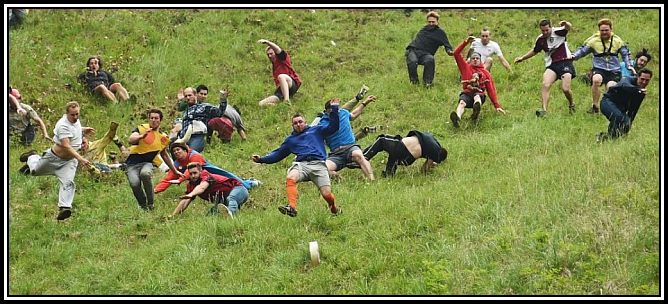
The Race is On & The Wheel is in The Lead!
Little Richard (1932-2020) – Slippin’ ‘n’ Sliding (1956)
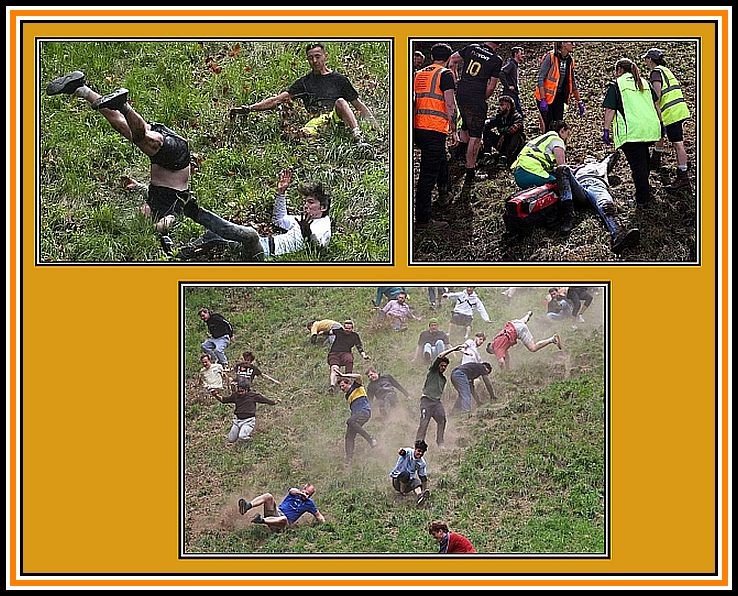
Injuries are not uncommon during the race, as participants in their haste and wish to reach the bottom of the Hill first and so win the Wheel of Cheese, trip, stumble, slip, fall or miss-their-footing and tumble down the Hill and totally lose all dignity along the way down!
Suzy Quatro (1950) & Chris Norman (1950) – Stumblin’ In (1978)
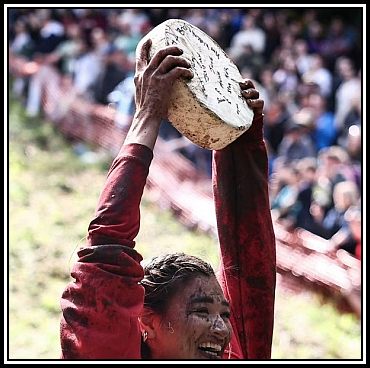 The Winner
-oOo-

Trinity Sunday falls on the following Sunday after Pentecost and nine weeks after Easter Sunday. This is the 31st May, 2026. It celebrates The Birth of The Church. The Trinity refers to The Three Persons of G-d, The Father, The Son and The Holy Spirit.
-oOo-

The French Open Tennis Championship is held at Stade Rolland Garros located in Paris. The complex was constructed in 1928 to host The Davis Cup and named for the French Aviator.
The tournament was established in 1891 and became a Grand Slam tennis event in1925. It is the premier Clay Court tournament in the world and the only Grand Slam tournament currently held on this surface. The characteristics of Clay favours long rallies and high physical demand and is widely viewed as the most physically demanding tournament in tennis. In 2026, the tournament took place from the 18th May until the 7th June.
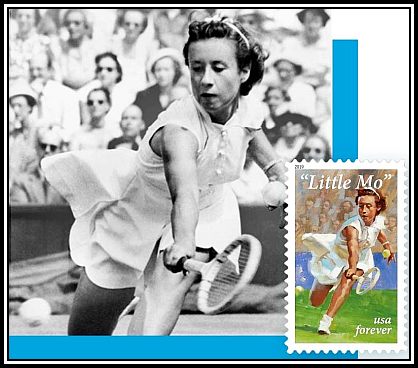 Maureen Connolly (Little Mo; 1934-1969) – Champion in 1953 & 1954
-oOo-

This is a sad date for me, as it was on the 25th of May, 2024 that my dog, Casanova/Puppy passed away. He was a wonderful dog and is still missed and will continue to be so.

Casanova/Puppy always seemed to enjoy the music of Fats Domino (1928-2017)
Wait and See (1957 – Written by Fats Domino & Dave Bartholomew (1928-2019)
—oooOooo—
—oooOooo—
—oooOooo—
—oooOooo—
—oooOooo—
Click here to GO to:
PAGE THIRTY-ONE: IN MEMORIAM
CASANOVA/PUPPY 14th JUNE, 2010 – 25th MAY, 2024
LIFE WITHOUT CASANOVA/PUPPY
—oooOooo—
It was most interesting to go through the Month of May and see the lovely photos and hear some of the music.
Jean: Really glad that you enjoyed the page. Charles
What a treat to encounter all the animal tales in this comprehensive overview of May! This was a month tailor-made for me. Donkeys are right up there with cats on my list of top animals, and horses have always fascinated me. I really enjoyed learning all about donkeys and wish everyone could be educated about their qualities. My favorite takeaway was the legend about the dark cross on the back of Jerusalem donkeys.
Besides cherished animals, you also cited one of my all-time human heroes, the incomparable Sir David Attenborough. I’ve admired him for years and was delighted to read about him here.
The description and photos of the cheese-rolling race were hilarious! That had to be seen to be believed. The musical selection, Little Richard’s Slippin’ ‘n’ Sliding, was sheer perfection!
Finally, the closing words about Casanova/Puppy and accompanying images were beautiful and touched my heart.
Linda: So glad that you enjoyed the take. Thanks for leaving such an excellent comment. It is much appreciated.
Charles