
THE CHRONICLES OF
HER GRACE THE DUCHESS
-oOo-
A VERY PRECIOUS GIFT

-oOo-
APRIL
-oOo-
 Truly, A Face To Launch a Thousand Ships
Ella Fitzgerald – Too Marvelous For Words (Recorded in 1964)
Conducted & Arranged by Nelson Riddle; Lyrics by Johnny Mercer & Music by Richard Whiting
Frank Sinatra – Too Marvelous For Words (Released in 1956)
Conducted & Arranged by Nelson Riddle
The reader must decide which version of this song to listen to while reading. I could not decide between them. So, I uploaded them both and leave the decision to others!
-oOo-

 Her Grace has shed her furs and is ready for Spring

Al Jolson – April Showers
Music by Louis Silvers & Lyrics by B.G. (Buddy) DeSylva; written in 1921
-oOo-
Although the song says: April Showers bring the flowers that bloom in May, Spring truly bursts forth during April. This can be seen in most gardens in the UK where the blossom of numerous trees may be seen. I remember one particular street when I was young called Glenhaven Gardens in Langley where there were large cherry trees lining both sides of the road. In April, the buds on the trees would burst open and glorious blossom would be seen. The branches of the trees from both sides of the street spread out and met thereby forming a glorious canopy of colour. When I lived in Langley, I would visit the quiet street and walk down its centre. As April wore on, the petals would fall forming a delightful rain. The Japanese say that the trees are crying.
 A Canopy formed by the Cherry Trees
Once I moved from the UK, whenever I visited, I would always try to arrange my visit in April. During these visits, I re-experienced the immense joy at seeing the canopy. Alas, nothing lasts forever, as proven from my last visit to the area whereupon I found the glorious trees had been felled! Life can be cruel at times!
-oOo-
Of course the most spectacular cherry blossoms in the U.S. are those around The Tidal Basin in Washington D.C. These trees were a gift from the Japanese Government and were planted in 1912. Mrs. Helen Herron Taft and the Viscountess Chinda, wife of the Japanese Ambassador to the U.S., planted two Yoshino Cherry Trees on the northern bank of The Tidal Basin.

-oOo-
There are many glorious floral sites to see around the world during the month of April. One that I especially like is the chestnut trees that adorn Paris in this month.

Count Basie (1904-1984) & His Orchestra – April in Paris – Recorded in 1955
-oOo-
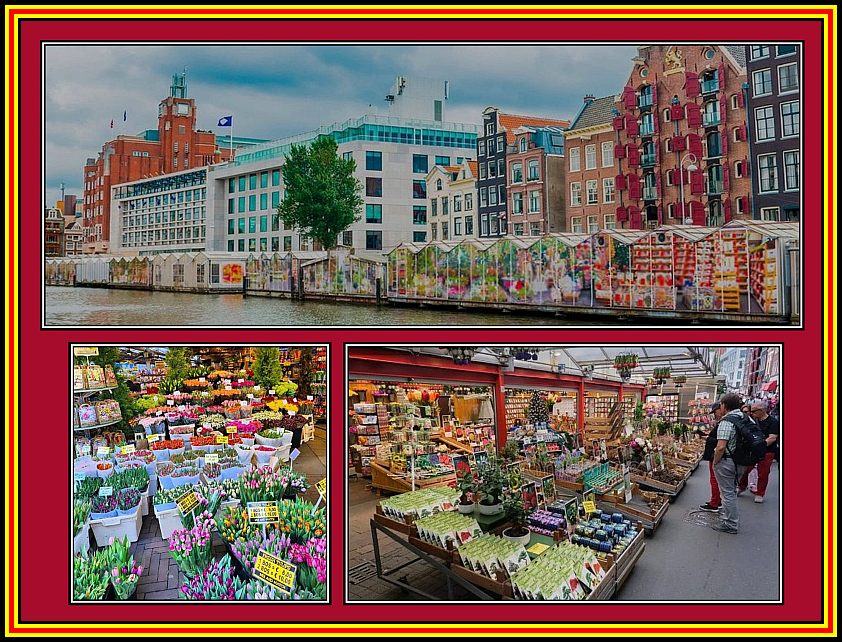 Amsterdam Floating Flower Market (Bloemenmarkt) on The Singel Canal & founded in 1862
And let us not forget the Tulip, which typically blooms in April. These are seen in their glory in Royal Parks in the U.K. and, of course, in The Netherlands.
Tulips From Amsterdam played on the Gavioli 98 Key Fairground Organ
This organ was a specific model and scale developed by The Gavioli & Cie firm in Paris,
which was led by Anselme Gavioli (1828-1902)
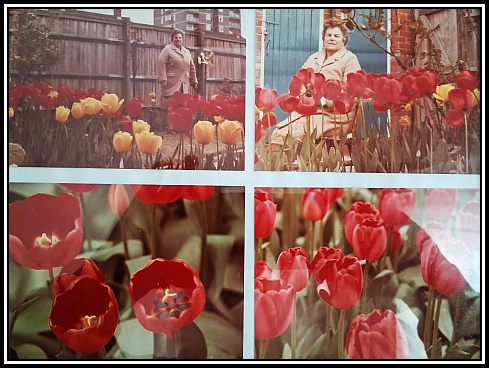 My Mother amongst Dutch Tulips in my parents back garden in 1978
-oOo-
 A Tulip Field just a few miles from London
-oOo-

April is the fourth month of the year and has thirty days. It is the second month of Spring and named Aprilis on the Roman Calendar. This name is thought to come from the verb to open, as with flowers, fruits etc. The month of April was noted for a number of festivals celebrating rural life and female Deities who were female, beginning on the first with the Feast of Venus on the Kalends (i.e., the first day of the month).
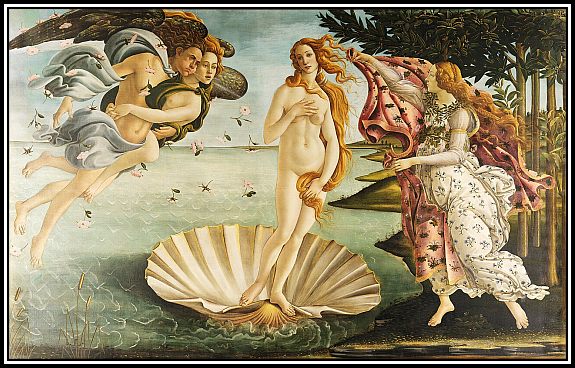 La Nascita di Venere – Painted by Sandro Botticelli (c 1445-1510)
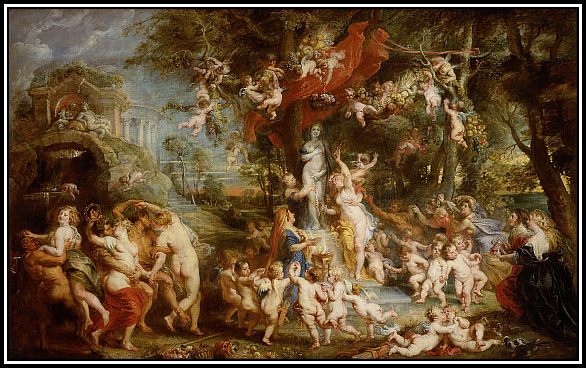 The Feast of Venus – Painted by Peter Paul Rubens (1577-1640)
April is known as the month of love. This is a result of its association with the Venus, Roman Goddess of Love and the Greek Goddess Aphrodite. Both symbolise love, lust, beauty, pleasure, passion, procreation, desire, sex, fertility, prosperity and victory together with hope, renewal and romance.
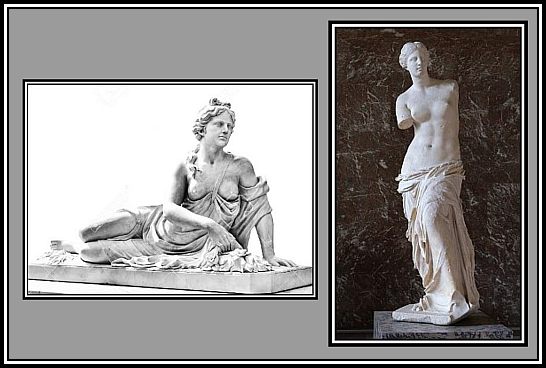 Aphrodite (Left) & Venus (Right)
-oOo-

April Fools Day or Fools Day is traditionally a day (or a morning) when practical jokes, hoaxes and pranks are played on the unsuspected. Should the teasing prove successful, those who fell foul of the joke are greeted with shouts of April Fool!
-oOo-

-oOo-
(The following is added purely because I like donkeys!)
-oOo-
There is a Galician phrase or proverb that states:
O 1 de abril van os burros onde non deben ir
which translates into Spanish as:
El 1 de abril van los burros donde no deben ir
which in English translates as:
On April 1st, donkeys go where they don’t have to go or where they shouldn’t go!
The proverb is associated with Dia Dos Enganos or Day of Deceits or April Fools Day. The poor Donkey is a metaphor for a man or woman who acts foolishly or is gullible or has been fooled! The proverb signifies that on The First of April, those who are not careful can fall for ridiculous stories or fall into traps or go where they should not.

-oOo-
There are a number of theories to account for the Day being associated with Fools, but its exact origin remains unknown. Some believe the Day has its origin in ancient spring festivals, such as the Roman Festival of Hilaria while the most popular belief is that it started in 1564 in France and has links to the adoption of the Gregorian Calendar in place of the Julian Calendar. This change moved New Year’s Day from late March or April the First to January the First. Communication was poor during this time, and many did not receive this news for some time and continued to note the New Year in spring, causing them to become a subject of mirth, and to be referred to as April Fools, which later become associated with fish and Le Poisson d’Avril tradition to take hold.
-oOo-
Teases and Torments on April Fools Day are not just restricted to school children. The British Broadcasting Company (BBC) has been known to present material to viewers involving a hoax. One such hoax that I saw was aired April 1st, 1957 on the news programme, Panorama. Here the viewers saw the harvesting of Spaghetti in Switzerland! Adding to the hope of belief came from using the well-known and respected broadcaster Richard Dimbleby (1913-1965).
 Harvesting Spaghetti in 1957
At the time of emission in the 1950s, spaghetti was not especially well known around the world and only known in the U.K. in tins with tomato sauce. Some eight million people watched this piece and the next day a huge number telephoned to either question it or ask how they might grow the pasta for themselves. The BBC continued the hoax by telling callers to place a sprig of spaghetti in a tin of tomato sauce the watch to see if it grows!
-oOo-
This is not the only hoax perpetrated by The BBC. In 1980, it was announced that the Big Ben would go digital and that the needles would be put up for sale!
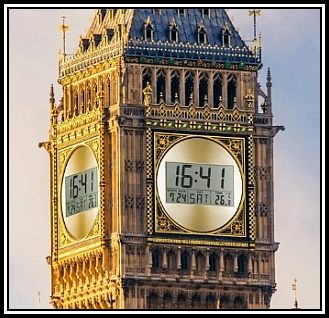 A Digital Big Ben
-oOo-
In France, the act is referred to as Le Poisson d’Avril, but here it involves the pinning or sticking of a paper fish to the innocent’s back. As a victim of this action on numerous occasions, I can assure you that having a paper fish pinned to one can be quite embarrassing, but annoyingly amusing for others!

-oOo-

Holy Weekmarks the seven days leading to Easter. The Episcopal Church, which is the main U.S. branch of the Anglican Church, notes that Holy Week is a separate season after Lent and not part of it. However, for all denominations, as with Lent, there are Days of Special Devotion to be observed throughout the week.
Holy Week changes dates annually because it is linked to Easter, which is a movable feast determined by the lunar cycle and the spring equinox rather than a fixed date on the Gregorian Calendar. Easter falls on the first Sunday after the first full moon following the Vernal Equinox, which in 2026, was the 21st March. As a result, Holy Week can straddle both March and April as it does this year.
-oOo-

Holy Week begins with Palm Sunday (see March) where worshipers commemorate Jesus’ entry into Jerusalem.
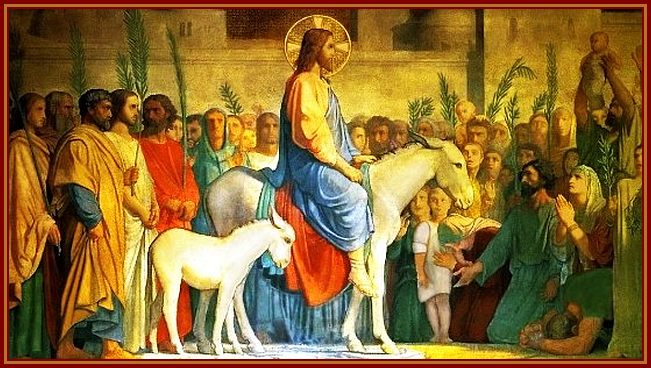
All Glory, Laud & Honour (Gloria, Laus et Honor) – The Choir of Kings College Cambridge (2018)
-oOo-

Palm Sunday is followed by Holy Monday which when worshipers observe Jesus turning over the tables of the moneylenders and the cleansing of The Temple, the questioning of Jesus’ authority and the anointing of Jesus at Bethany.
On Holy Tuesday (Fig Tuesday), Jesus’s predictions of his own death are observed by worshipers.
And Holy Wednesday (Spy Wednesday) recalls the story of Judas Iscariot betraying Jesus to the Chief Priests. Judas was considered as the spy among the disciples.
–oOo-

Holy Week comes to a climax beginning with Maundy Thursday (Holy Thursday) which commemorates the Last Supper, where Christ lays out the model for the Eucharist or Holy Communion. Prior to the meal, Jesus washed the feet of theApostles.
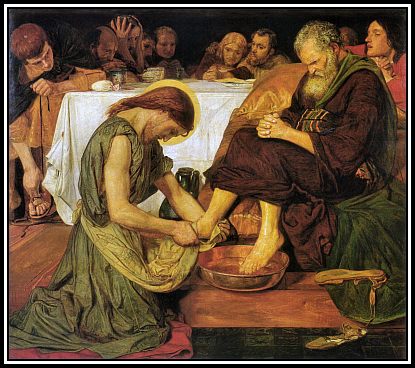
Then He poured water into a basin an began to wash the disciples’ feet and to wipe them with the towel that was wrapped around Him (John 13:5).
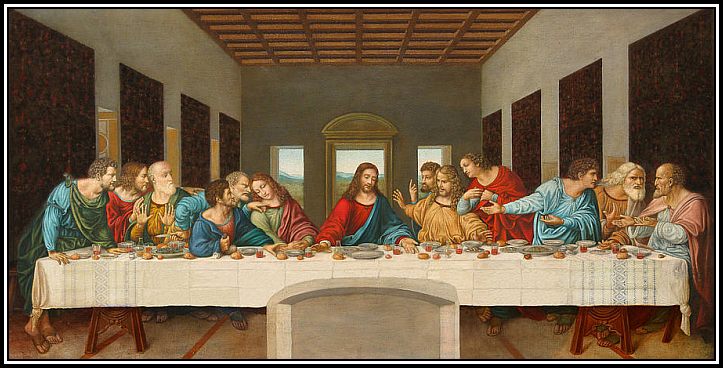 The Last Supper painted by Leonardo da Vinci (1452-1519)
The Mural was painted between ~1495 and 1498 and housed in the refectory of
The Convent of Santa Maria delle Grazie in Milan
-oOo-
Mahalia Jackson (1911-1972) – In the Upper Room recorded in 1952
-oOo-
In the U.K., the Monarch attends a special church service on Maundy Thursday. As a child, the service could be heard on the then Home Service (Radio 4) of the BBC, but alas this is no longer the case.
-oOo-
Since the time of Edward I (1239-1307), the Monarch offers alms to deserving senior citizens consisting of one man and one woman for each year of the his/her age. The alms, called Maundy Money, were distributed in red and white purses. The red purse contained regular currency and is given in place of food and clothing. The white purse has money in the amount of one penny for each year of the Sovereign’s age. Since 1822, rather than ordinary money, the Sovereign gives out Maundy Coins, which are specially minted one, two, three and four penny pieces, and are legal tender. The service at which this takes place rotates around English and Welsh churches, though in 2008 it took place for the first time in Northern Ireland at Armagh Cathedral. Until the death of James II (1633-1701, the Monarch would also wash the feet of the selected poor people.
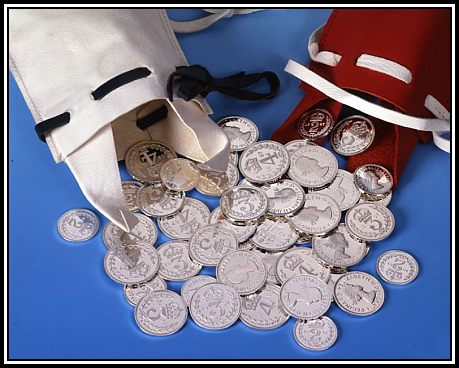 Maundy Coins
-oOo-
Maundy Thursday initiates the Paschal Triduum, the period which commemorates the Passion, Death, and Resurrection of Jesus all of which He predicts at The Last Supper along with the Denial of Peter. This period includes Good Friday and Holy Saturday, and ends on the evening of Easter Sunday.
-oOo-

Good Friday (Holy Friday) recalls the Passion of Jesus and ends with Jesus’ Death on the cross. This is a solemn Christian Holy Day and commemorates theCrucifixion of Jesus and his Death at Calvary (Golgotha) and is observed during Holy Week as part of the Paschal Triduum. Many churches hold the Service of the Great Three Hours’ Agony from noon until 3p.m., which are the hours that The Bible notes when darkness covered the land until Jesus’s Death on the cross.
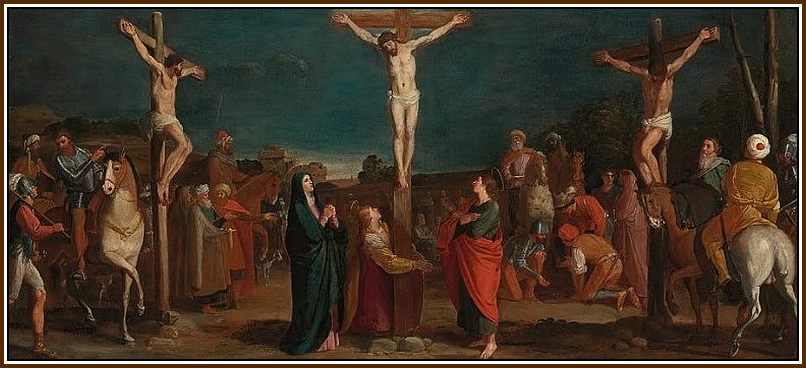 Crucifixion with Thieves painted by Bartolomeo Carducci (1560-1604)
The Choir of Kings College Cambridge – There is a Green Hill far away
Words by Cecil Frances Alexander (1818-1895)
While Jesus was suffering on the cross, he showed great concern for his mother and he asked the Apostle John to take care of her and treat her as his mother. He also asked his mother to consider John to be her son (John 19:26-27). John immediately took Mary into his home. This command fulfilled the duty of the eldest son to provide for his mother by placing her under the protection of the disciple whom he loved.
When Jesus was dead, he was brought down from the cross and given to his mother, Mary.
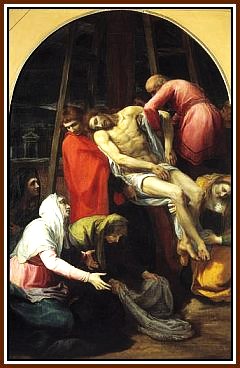 Descent from the Cross painted by Bartolomeo Carducci (1560-1608)
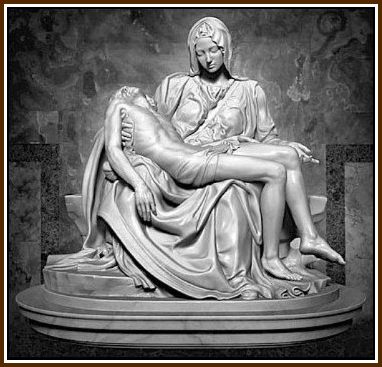 Pietà (1498-1499) by Michelangelo (1475-1564)
Jesus’s body was taken to a Tomb (The Holy_Sepulchre) where it lay until the Sunday morning since Shabbat (The Sabbath) was approaching, and as this being a day of rest for believers, nothing more could be done for Him until it was concluded.
-oOo-
The date of Good Friday varies each year in both in both the Gregorian and Julian Calendars. In 2026, it occurs on the 3rd April on the Gregorian Calendar and the 10th April on the Julian Calendar.
-oOo-
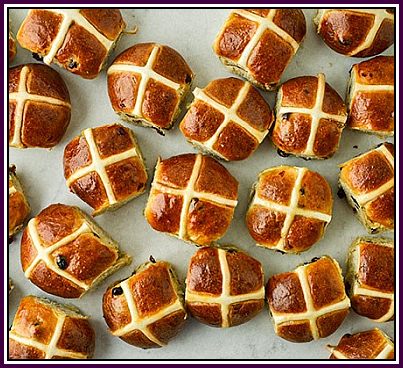
When I was a child, one ate Hot Cross Buns on Good Friday. These were also made in other English-speaking countries, but alas, seem to be disappearing from the shelves of bakers and supermarkets nowadays.
Hot Cross Buns – a Traditional Children’s Song
A Hot Cross Bun is a Spiced Bun, usually containing small pieces of raisins and marked with a Cross on the top, and although seemingly plain and simple, are delicious.
Good Friday comes this month, the old woman runs.
With one or two a penny hot cross buns.
From Poor Robin’s Almanac (1733)
The eating of the Bun while breaking the fast on Good Friday morning marked the end of the Lent season. The components of the Bun are symbolic and represent the crucifixion (i.e., the Cross) and the embalming of Christ (i.e., the spices).
In 1592, a decree was issued that forbad the sale of such Buns except at burials, Good Friday and Christmas since it was felt that they should only be sold on Holy Days. This led to most Buns being made in domestic kitchens.
-oOo-

Holy Saturday is the period of time between the Crucifixion and the Resurrection and commemorates the Harrowing of Hell. Christians believe that it was at this time when Jesus rested in the Tomb and then performed, in spirit, descent into Hell and was raised up to Paradise, having liberated (given Salvation) to those who had been held captive.
-oOo-

Eastertide celebrates The Resurrection of Jesus Christ and begins on Easter Sunday, which begins Easter Week. It lasts for forty days to commemorate the time the resurrected Jesus remained here prior to His Ascension. However, some groups believe that Eastertide lasts fifty days and ends of Whitsunday (Pentecost), which is when the Holy Spirit (Ghost) came upon those believers in Jerusalem.
The Sundays from Easter to Ascension Day have their own individual titles:
- The First Sunday is Easter Sunday;
- The Second Sunday is also known as Divine Mercy Sunday, The Octave Day of Easter, White Sunday, Quasimodo Sunday, and Low Sunday;
- The Third Sunday is known as Misericordia Sunday, Good Shepherd Sunday and The Sunday of the Myrthbearers;
- The Fourth Sunday is Jubilate Sunday, Good Shepherd Sunday, Vocations Sunday and The Sunday of the Paralytic;
- The Fifth Sunday is Cantate Sunday and The Sunday of the Samaritan Woman; and
- The Sixth Sunday is Sunday of the Man Born Blind.
-oOo-
Easter Sunday and Pentecost correspond to pre-existing Jewish Feasts: The first day of Pesach (פסח; first of seven or eight days) and the observance of Shavu’ot(שבועות).
-oOo-

Easter Sunday occurs on the 5th April in 2026. It is the day that commemorates The Resurrection of Jesus, which is described in the four Gospels:
MATTHEW 28:3-15; MARK 16:5-8; LUKE 24:4-12; JOHN 20:2-18
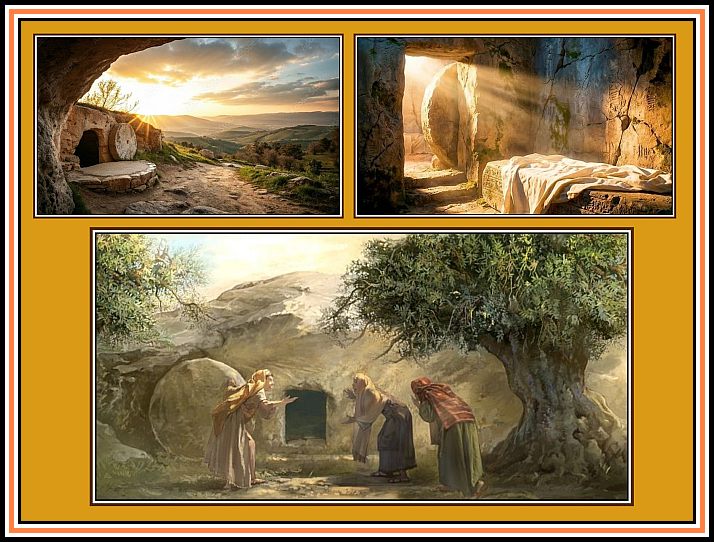 HE IS RISEN
The Edwin Hawkins (1943-2018) Singers – Oh Happy Day
 The Lily is the Flower associated with Easter & used to decorate the churches during this time
-oOo-
The Tabernacle Choir at Temple Square – Christ The Lord is Risen Today
written by Charles Wesley (1707-1788)
-oOo-
The Tabernacle Choir at Temple Square – He is Risen written by Cecil Frances Alexander (1818-1895)
with music by Joachim Neander (1650-1680)
-oOo-
The Tabernacle Choir at Temple Square – The Hallelujah Chorus from George Frideric Handel‘s (1685-1759) Messiah written in 1741
-oOo-
Hallelujah – From the album, A Soulful Celebration (various artists); released in 1992
-oOo-
The Hallelujah Chorus – a Jazz version arranged by Adam Podd at the First Unitarian Church Brooklyn
-oOo-
Joy to The World – Brigham Young University (BYU) Combined Choirs & BYU Philharmonic
Written by Issac Watts (1674-1748)
-oOo-
Easter is a time for celebration as Spring is now here and, hopefully, the long dark days of Winter have passed. Families used to buy new outfits for their children to wear at this time of the year, first on Easter Sunday – suits for the boys, dresses for the girls.
At Easter let your clothes be new,
Or else be sure you will it rue.
From Poor Robin’s Almanack
-oOo-
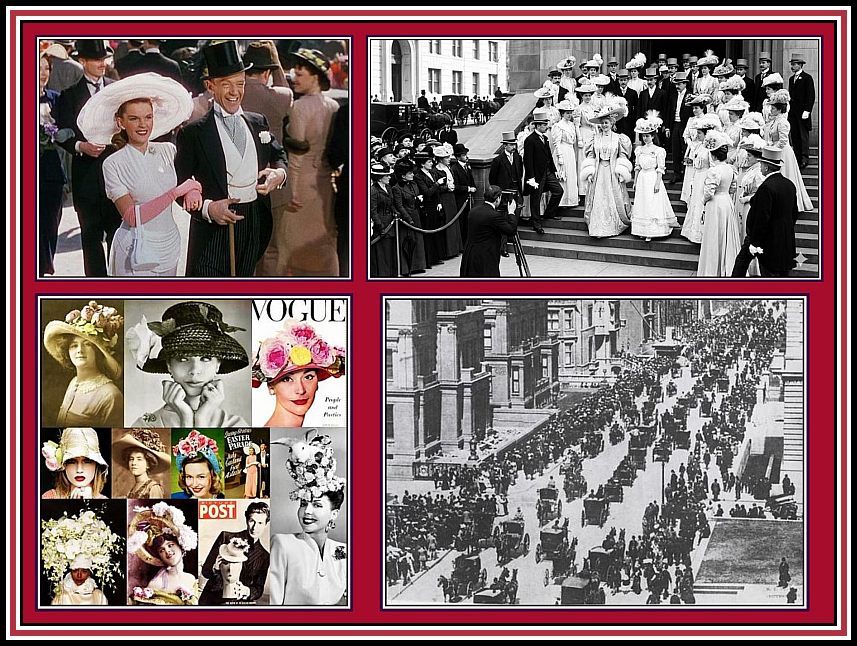
Judy Garland (1922-1969) & Fred Astaire (1899-1987) – Easter Parade (1948)
Written by Irving Berlin (1888-1989) & published in 1933
From the late 1870s until the 1950s, The New York City Easter Parade was one of the main cultural expressions of Easter in the U.S. The Parade started as an informal promenade when New York City’s most prestigious churches along Fifth Avenue began decorating their interiors with beautiful floral displays at Easter. The wealthy upper crust came to see the flowers and would walk along the Avenue between the churches. This grew into The Parade and extravagant hats (the Easter Bonnet) were added during the 1930s to accessorise the dresses of all the colours of the rainbow. Although not what it was in the 1940s and 1950s, the event continues today and is open to all-comers with pedestrians walking on Fifth Avenue, between 49th to 57th Streets between 10 a.m. and 4 p.m.
-oOo-
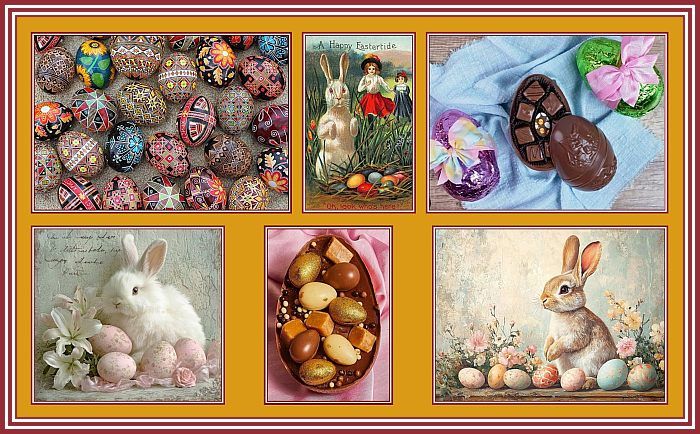
Today Easter traditions blend Christian Religious Services with secular customs such the Easter Bunny and Easter Egg Decorating and Hunting. Decorated eggs are hidden and hunted for by children with the hiding of the eggs is attributed to the Easter Bunny or Hare.
 The Easter Bunny
Gene Autry (1907-1998) – Here Comes Peter Cottontail
Written in 1949 by Steve Nelson (1907-1981) and Jack Rollins (1906-1973)
The devout do not meat and animal products, including eggs, during Lent. The egg at Easter symbolises the empty tomb of Christ, and generally symbolise fertility and rebirth. The custom of the Easter Egg is believed to have begun with the early Christians living in Mesopotamia, and from there, it spread all over the world via Europe. These Eggs were stained, firstly in red to symbolise the blood shed by Christ at his crucifixion, and then with other colours together with the addition of a number of designs.
The first chocolate Easter Eggs were seen at the court of Louis XIV in 1725. In 1873, J.S. Fry & Sons made the first hollow egg by pouring a chocolate paste into an egg mould. Cadbury was the first to create the Easter Egg as we know it today after developing a pure cocoa butter that could be moulded into smooth shapes. And today, chocolate Easter Eggs are sold in the millions.

-oOo-
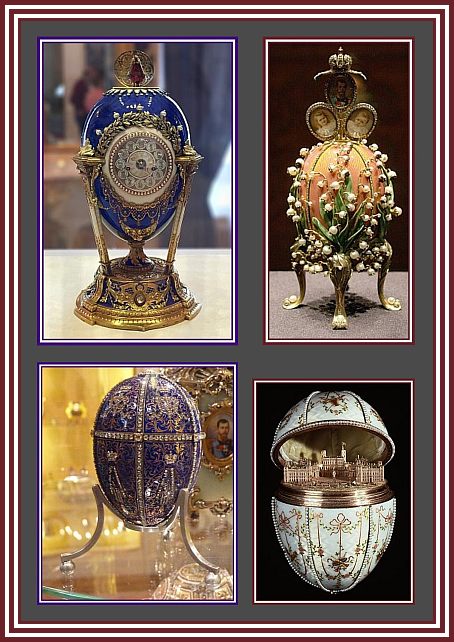
Perhaps the most fabulous of all Easter Eggs were made by House of Fabergé for the Russian Tsars Aleksandr III and Nikolai II as gifts for their wives and Nikolai’s mother.
-oOo-

During the time of PASSOVER (i.e., THE PILGRIMAGE OF THE PASSING OVER), the Jewish people observe the EXODUS of the Israelites from Egypt where they had been enslaved. The PASSOVER begins on the 15th day of the month of Nisan, which at present falls between March 26th and April 25th of the Gregorian Calendar and continues for seven to eight days.
G-D had previously told Moses to tell Pharaoh to allow the Israelites to leave Egypt (LET MY PEOPLE GO), but on each occasion, he refused. At each refusal to allow the people to go free, G-D responded by bringing a series of nine separate plaques down on the Egyptians, each one being more survive than the previous. The plagues were:
- The water of the River Nile and all reserves of water are turned to blood;
- The whole land of Egypt is invaded by Frogs;
- The dust of the land was turned into Gnats;
- THE LORD next sent swarms of flies on the Egyptians;
- The next plague brought pestilence on all animals in the country – livestock, donkeys, horses, camels, etc.;
- The Egyptians were next infested with multiple boils on their bodies;
- THE LORD next sent the worst hailstorm that had ever fallen on Egypt. Any animal or human that was outside and hit by the hail died; the hail was accompanied by thunder and lightning;
- The next plague saw multitudes of locusts covering the land and homes; and
- The ninth plague consisted of three days of darkness that covered the land of Egypt; and still Pharoah’s heart was hardened and he would not allow the Israelites to leave and worship G-D,
Finally, THE LORD said:
About midnight I will go throughout Egypt. Every firstborn in Egypt will die, from the firstborn of Pharaoh, who sits on the throne, to the firstborn of the slave girl, who is at her hand mill, and all the firstborn of the cattle as well. There will be loud wailing throughout Egypt—worse than there has ever been or ever will be again.
Exodus 11: 4–6
In the Book of Exodus, G-D commands Moses to instruct the Israelites to slaughter a lamb and take its blood and mark the doorframes of their homes. They were also told to eat the lamb that night and given instructions for the meal’s preparation. This night, G-D would bring down on Egypt the Tenth Plague. Here, G_D would smite all the firstborn in Egypt. However, when G-D saw the blood on the doorframes of the Israelites, G-D would pass over those homes.
Following this plague. Pharoah allowed the Israelites to leave Egypt and to seek the land promised to them by G-D.
-oOo-
The Jewish people observe The PASSOVER with prayers and a special meal (Seder; held either on one night or two nights) where the tradition of THE PASSOVER is remembered.
-oOo-

St. George (George of Lydda) was born and buried in Lydda, which is now known as Lod in Israel. He became a Christian and was martyred for his beliefs on the 23rd April, 303 during the Diocletianic Persecution following the issuing of a number of edicts whereby Christians were required to renounce their faith and return to more traditional practices. It was not until 313 with the Edict of Milan that Christianity was given equal rights as others and the persecution came to an end.
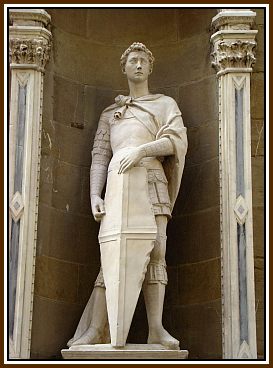 St. George by Donato di Niccolò di Betto Bardi (known as Donatello; 1386-1466)
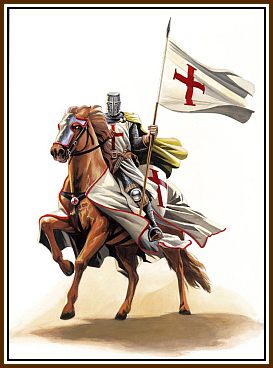
It is believed that St. George was a Roman Soldier and a member of the Praetorian Guard of Emperor Diocletian. As a result of his military association, since the time of The Crusades (1095-1291), he became venerated as a Military Saint.
-oOo-

St. George is The Patron Saint of England. The Flag of St. George was first associated with England in the 12th Century when it was flown by English merchant ships in order to have the protection of the Genoese when in the Mediterranean Sea.
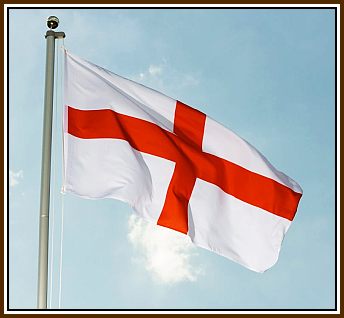 The Flag of St. George
From the time of The Crusades, under the Pope’s orders, the English knights were required to be distinguished by wearing the flag of St. George. At The Battle of Crecy in 1346, Edward III (1312-1377) ordered the issuing a decree that his Gendarmes (Men at Arms) be identified by the wearing of the colours of St. George. The degree was also extended to all English ships.
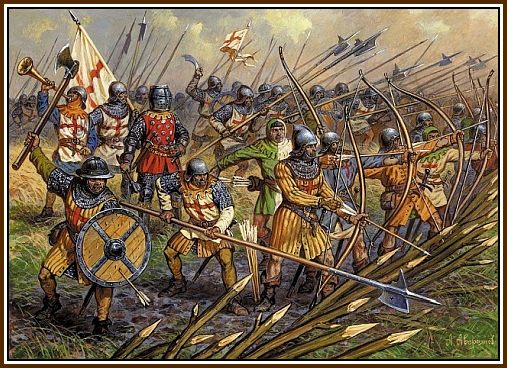 Depiction of The Battle of Crecy
It was Edward III who made St. George The Paton Saint of England when he formed the Order of the Garter in the Saint’s name in 1350. The Most Noble Order of The Garter is an Order of Chivalry and is the highest Order of Knighthood and is dedicated to the St. George. The naming of the order is interesting and well worth reading.
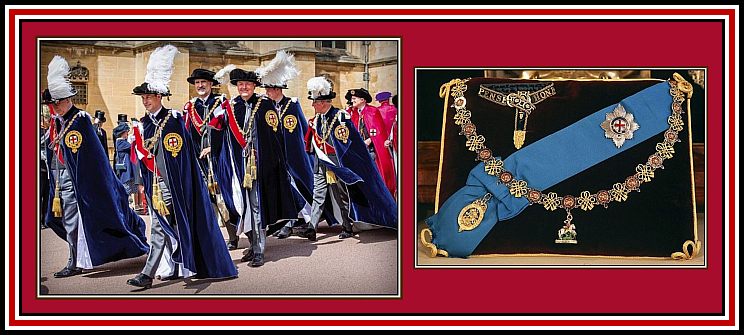 Left: Member of The Noble Order; Right: The Insignia Wore with the Robe
At this time, the king also declared St. George as the Patron Saint of England and his importance was cemented by Henry V (1386-1422), at the Battle of Agincourt in France which took place on St. Crispin’s Day, 25 October 1415. Eventually, the flag of St. George was adopted as the National Flag.
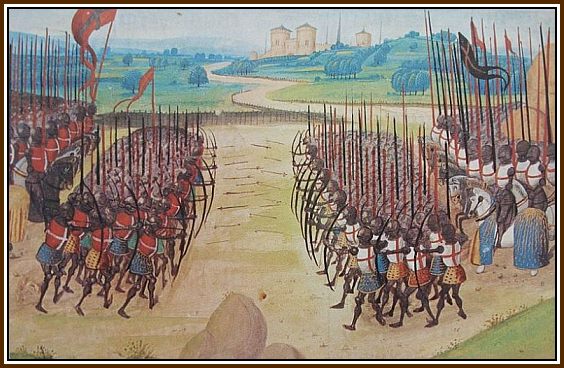 Depiction of The Battle of Agincourt – where the rallying cry was:
G-d for Harry, England, and Saint George!
Laurence Olivier (1907-1989) – The St. Crispin’s Day Monologue – from the film, Henry V, released in 1944. The film was made during the Second World War and was intended as a patriotic rallying cry at the time of the Invasion of Normandy.
The film was based on Shakespeare’s play, Henry V
-oOo-

There are a number of legends associated with Saint George including acts of liberation, protection from vampires and, the most famous of his killing the Dragon. This legend involves a Dragon who demanded tribute from a village each day. When there was nothing left in the village of value, a daily human sacrifice was made. Eventually the princess was chosen to be the next offering. Apparently, as she made her way to the Dragon’s cave, St. George came upon her and why she was crying. She told him of her situation, and despite her entreaties for him to flee, he refused and went on to slay the Dragon.
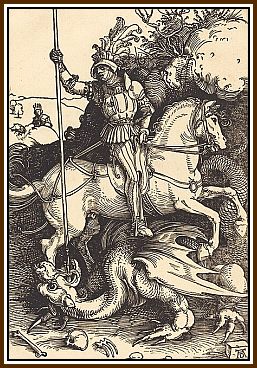 St. George killing The Dragon by Albrecht Dürer (1471-1528)
The earliest source of the legend was during the 11th Century and was first set in Cappadocia and later in Libya. The legend spread, and by the time of the First Crusade, it was believed that St. George and his fellow soldiers fought at Antioch and Jerusalem.
-oOo-
Some believe that The Saint killed the Dragon at Dragon Hill, Uffington in England and that no grass grows where its blood flowed. Naturally, this version of the legend, although highly unlikely, finds great favour with me!
-oOo-
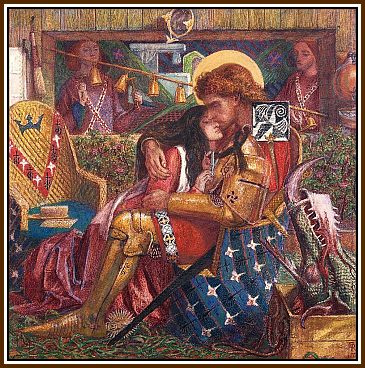 The Wedding of St. George & The Princess Sabra (a water colour painted between 1861-1862)
by Dante Gabriel Rossetti (1828-1882)
It is generally thought that St. George never married. I include this painting here purely because I like it!
-oOo-

When I was a child, I lived just off the junction of a number of major arteries called Mile End Gate. Very close to the junction was the Mann, Crossman, Paulin Brewery (erstwhile Albion Brewery). At the far end of the brewery’s forecourt was, to me, a magnificent clock with a sculpted depiction of St. George killing the Dragon. I was fascinated by this depiction and still admire it very much.
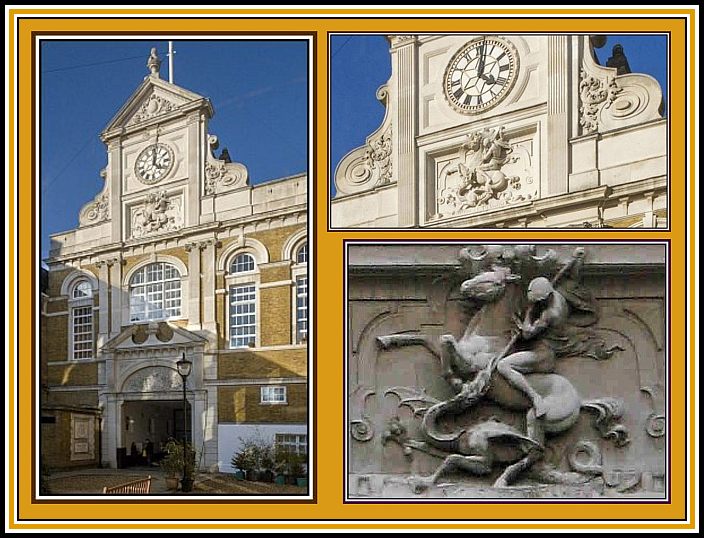 The Entrance to The Erstwhile Brewery – now, converted into flats
-oOo-
The Scout Association in the UK celebrates St George’s Day. Most Scout Districts host events on the Sunday closest to the 23rd April including a parade and a religious service for their members.
When I was a young boy, I was a Wolf Cub and then an Air Scout in the Scout Movement. Although I enjoyed being a Wolf Cub, I found Scouting to be too regimental for me and grew more and more annoyed with it. Thanks to my experiences with Scouting, I got to hate camping. What irritated me most about camping with the Scouts was the constant searching for wood to burn so that meals could be prepared. One collected wood to cook breakfast, and then once the washing-up was done, one was expected to collect wood for lunch, etc., etc. One was expected to pass one’s evenings at a huge campfire where other Packs were gathered and sing the most silly of songs: one that sticks in my mind was THE COW KICKED NELLIE IN THE BELLY IN THE BARN!!!
The Cow Kicked Nellie in The Belly in The Barn
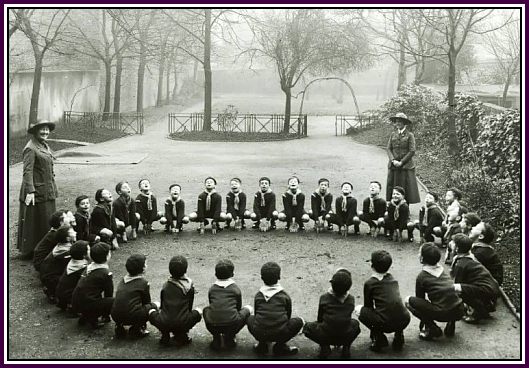 The Grand Howl led by two Lady Cubmasters in 1916
The Grand Howl (Canada)
I will say no more about these soirees! Worse was to come: one slept on hard ground – no inflatable mattresses in those days – one had a blanket for warmth that was pinned to form a sleeping bag of sorts – no real sleeping bags then either. I am told that camping in those days is nothing like it is today, but I have since refused all requests to enjoy the delights of camping …….. that is until I went to Australia when I was happy to sleep on an inflatable mattress snug in a very warm sleeping bag (with a hood!) and lay under The Milky Way and The Southern Cross (Crux) with my favourite music (at that time) playing in my ears! I remember listening to the music of Perez Prado & His Orchestra at the time (amongst other things!). Hardly celestial music!!!
Rosemary Clooney (1928-2002) & Perez Prado (1916-1989) & His Orchestra – Sway (¿Quién será?)
Perez Prado & His Orchestra – Quizas Quizas Quizas
Upon reflection, I have to confess that I regret my refusing to take part in Scouting. I think that this was a great error on my part, for I believe now that the Movement has much to offer youths, both boys and girls. I remember that both as a Wolf Cub and Air Scout, marching in a St. George’s Day Parade in The City of London on several occasions.
-oOo-
Since the 1990s, The Flag of Saint George is commonly flown at sporting events, especially Football, whenever an English team is involved. Today more parades and gatherings to remember the Day are held in England with perhaps the largest being held at Trafalgar Square. There is also a campaign to make the 23rd April, a national holiday, which is growing in support each year.
 Pearly Kings & Queens celebrating the day in Trafalgar Square
-oOo-

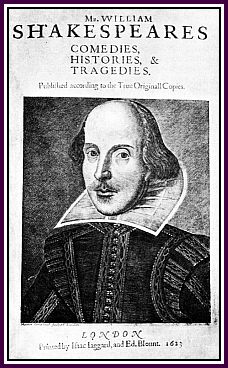
William Shakespeare was born on 23rd April, 1564 in Stratford-upon-Avon, Warwickshire where he died on the same date in 1616. He is known as The Bard of Avon and considered the greatest writer in the English language and the world’s pre-eminent dramatist. He wrote 39 plays, 154 sonnets, three long narrative poems and other verses. His works have been translated into all major languages and performed the world over. He is the most influential writer in English and his offerings are still studied.
-oOo-
Other events of note that occurred on the 23rd of April include:
- birth of the artist J. M. W. Turner (1775–1851);
- death of the Romantic poet William Wordsworth (1770–1850);
- death of the Romantic poet Rupert Brooke (1887–1915);
- the death of the writer Thomas Tickell;
- the death of cricketer Jim Laker (1986); and
- the death of cricketer Denis Compton (1997).
-oOo-

Finally, the 29th April is the day marking the death of Saint Catherine (1347-1380) of Siena. She was a mystic and diplomat who engaged in papal and Italian politics through extensive letter-writing and advocacy and was canonized in 1461. Later, she was declared a Patron Saint of Rome in 1866 by Pope Pius IX and of Italy with St. Francis of Assisi in 1939. She was the second woman to be declared a Doctor of the Church on 4 October 1970 by Pope Paul VI. In 1999 St. John Paul II proclaimed her a Patron Saint of Europe.
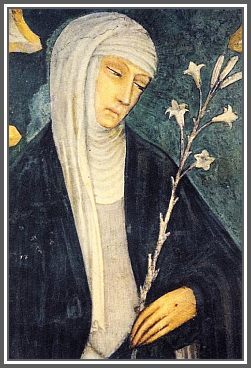 Fresco of Saint Catherine by Andrea Vanni (1332 – c. 1414)
—-oooooooOOOooooooo—-
—-oooooooOOOooooooo—-
—-oooooooOOOooooooo—-
—-oooooooOOOooooooo—-
Click here to GO to:
PAGE THIRTY-ONE: IN MEMORIAM
CASANOVA/PUPPY 14th JUNE, 2010 – 25th MAY, 2024
LIFE WITHOUT CASANOVA/PUPPY
—-oooooooOOOooooooo—-
—-oooooooOOOooooooo—-
Charles, this is the best explanation of Easter that I’ve ever read, and the artwork is spectacular! Thank you for including the Fabergé collage. Those eggs are my passion.
Your mother’s tulips were gorgeous. The photo of the cherry tree canopy (now sadly gone) took my breath away. One of my fondest childhood memories was traveling to DC as a family to see the National Cherry Blossom Festival.
I share your reflections on camping. And I simply can’t imagine doing it without a real camping bag!
Did you know that St. George’s Day is a major cultural holiday in Spain? It’s the same day as the death of Cervantes and is a celebration of love and literature. Known as the Day of Books and Roses, people exchange books and roses in a romantic tradition.
Linda: Thank you for your additional information about St. George’s Day. It is, along with your comments, greeted with thanks. Charles