THE CHRONICLES OF
HER GRACE THE DUCHESS
-oOo-
A VERY PRECIOUS GIFT

-oOo-
JUNE – PART TWO
-oOo-
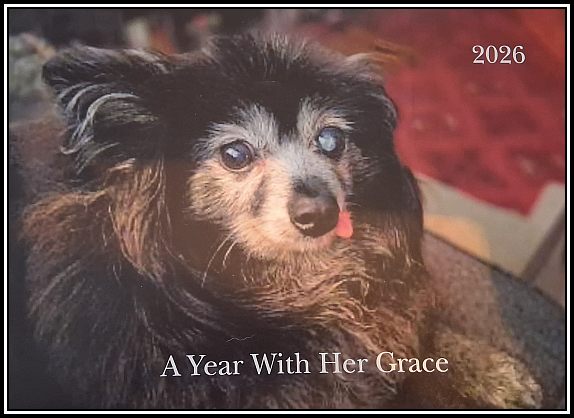 Truly, A Face To Launch a Thousand Ships
-oOo-
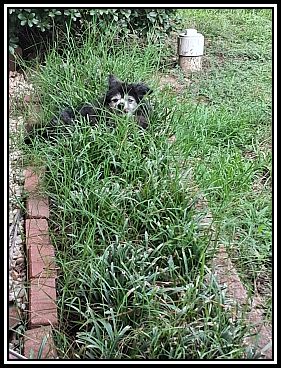
Oh Where Oh Where Can My Little Dog Be
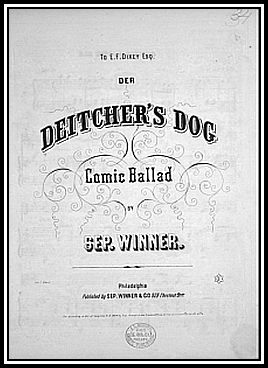
Written in 1864 by American songwriter and publisher Septimus Winner (1827-1905),
In Lauterbach hab’ ich mein’ Strumpf verlor’n (i.e., In Lauterbach I lost my stocking) and
Originally published as a comic song titled, Der Deitcher’s Dog
-oOo-
 Her Grace having just been visited by the Groomer
You Were Never Lovelier – Sung by Fred Astaire (1899-1987) in the film (1942) of the same name
Written by Jerome Kern (1885-1945) & Johnny Mercer (1909-1976)
-oOo-
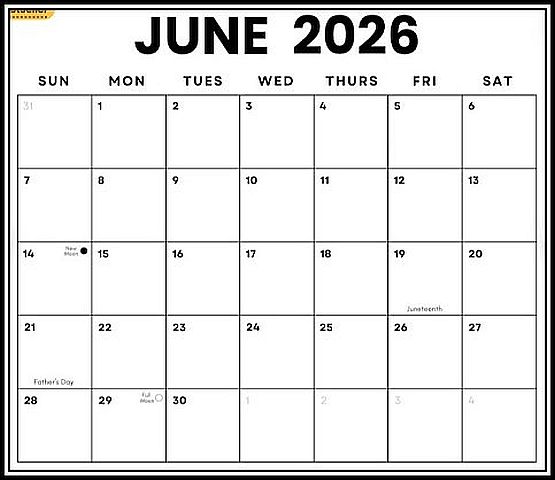
-oOo-

The Academy of St. Martin In The Fields – SUMMER – from The Four Seasons by Vivaldi
Sir Neville Marriner, Conductor & Alan Loveday, Solo Violinist
-oOo-

Ascot Racecourse is used for thoroughbred horse racing and hosts thirteen of Britain’s thirty-six annual Group 1 Flat Races and three Grade 1 Jumps Races. The Racetrack was founded in 1711 by Queen Anne (1665-1714) and is six miles from Windsor and twenty-miles from London. Twenty-six days of horse racing take place at Ascot each year. These take place between April and October when eighteen Flat Races meetings take place and between October and December for eight Jump meetings occur. However, the highlight of the year takes place during Royal Ascot.
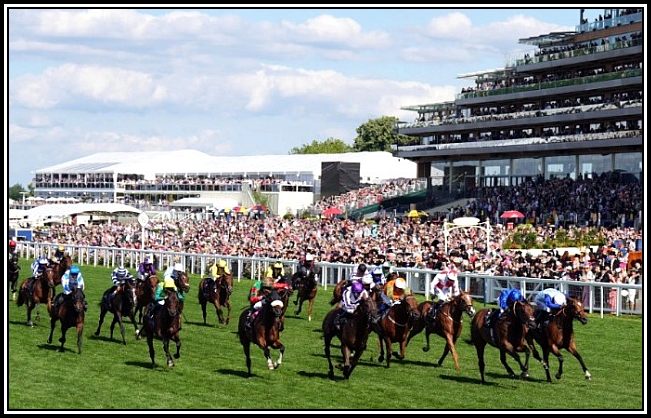
Royal Ascot evolved from the first four-day race meeting held at The Racecourse in 1768, however the meeting only started to take shape with the introduction of The Gold Cup in 1807. The meeting is the most prestigious of all horse racing events in the U.K. with huge sums being made available in prize money. Some five-hundred horses compete during the course of the event.
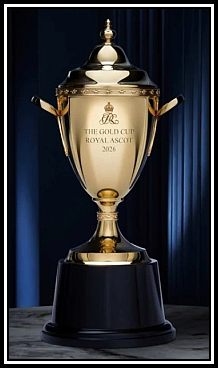 The Gold Cup
-oOo-
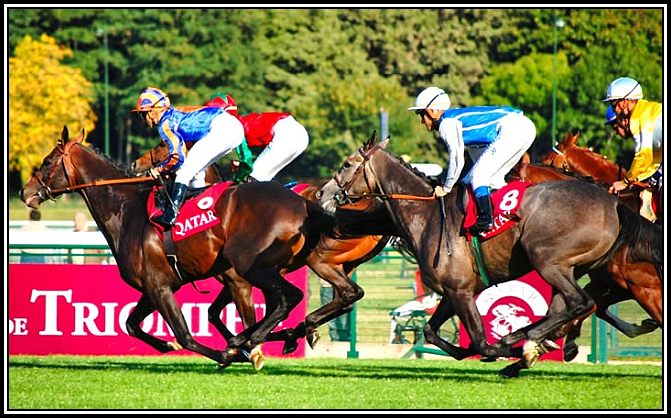
Royal Ascot is held annually over five days, generally in the third week of June. At 2 P.M. on each day, the monarch arrives in an open coach and proceeds to the Royal Enclosure while the National Anthem is played and the Royal Standard is raised.
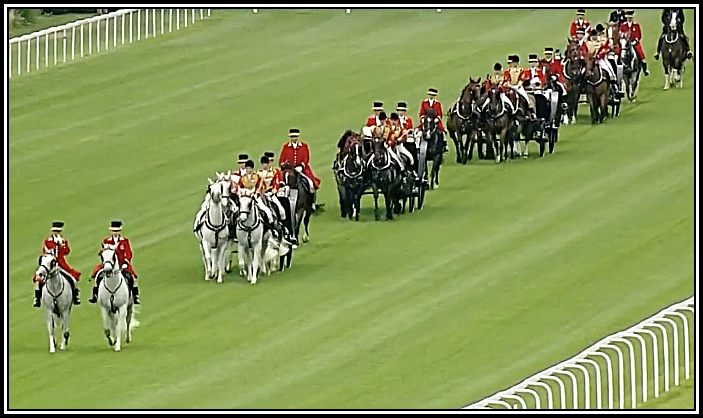 The Arrival of The Monarch
The first day of Royal Ascot is on Tuesday with the first race being the Queen Anne Stakes. This is followed by the King Charles III Stakes and the St James’s Palace Stakes. All of the races of the week have a Royal Theme.
On Thursday, The Gold Cup is run and is the most prestigious race held during Royal Ascot. The race is long and run over approximately 2.5 miles (i.e., two miles, three furlongs and two hundred and ten yards; four-thousand and fourteen metres) and is open to horses that are four-years or older. The day is also known as Ladies’ Day.
-oOo-
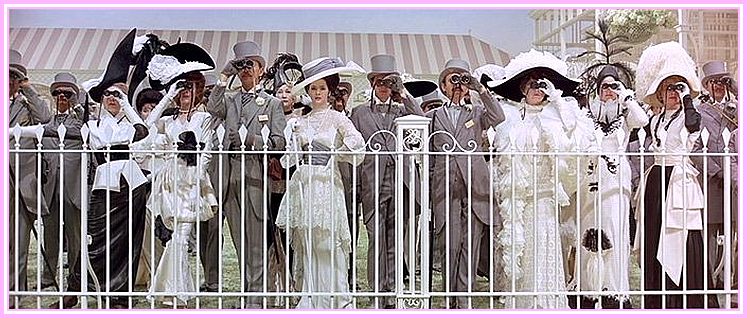
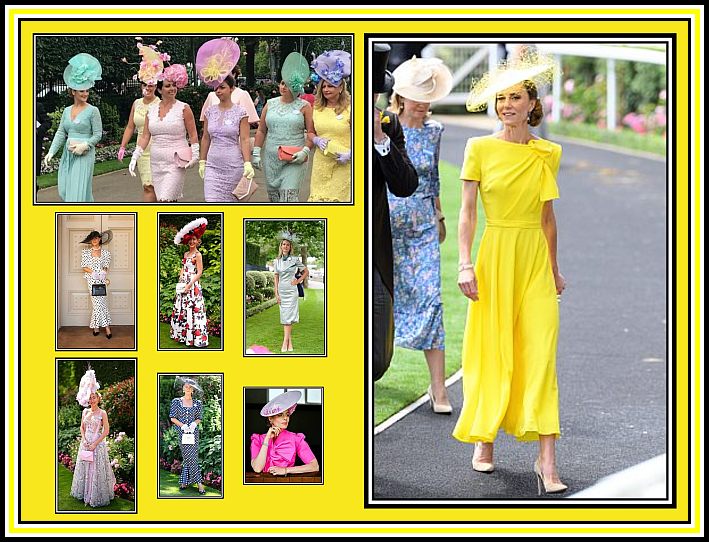 Women’s Fashion at Royal Ascot
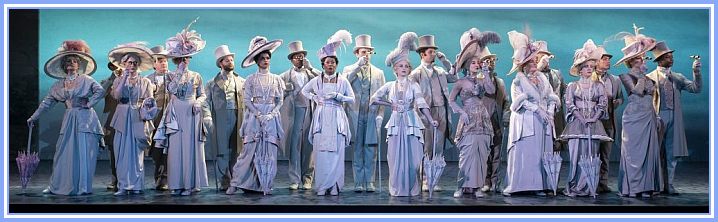
Ascot Gavotte – From the Musical, My Fair Lady (1956)
With lyrics by Alan Jay Lerner (1918-1986) & music by Frederick Loewe (1901-1988)
It was first produced on Broadway in 1956 and on the West End stage in 1958
There have been a number of revivals and it was filmed in 1964 to great acclaim
-oOo-
There are four enclosures at Ascot Racecourse, three of which are open to the public for the viewing of the races. The most prestigious enclosure is The Royal Enclosure where access is limited. It was commissioned by George IV (1762-1830) along with a Royal Box and the first public grandstand was erected in 1838.
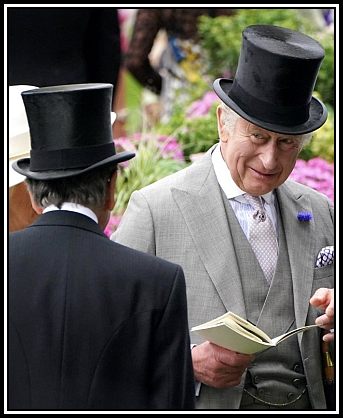 King Charles III at Royal Ascot
Each of the enclosures have a dress code with the Royal Enclosure being the most strict. Men are required to wear grey, navy or black Morning Dress and Top Hat, and women are required to wear formal daywear and a hat with a solid base of four inches or more in diameter.
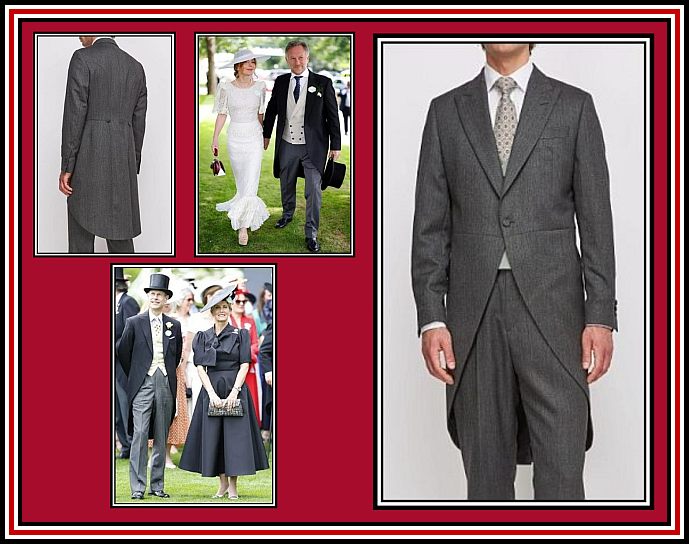 Modern Fashion at Royal Ascot – Men
The origins of the Royal Ascot dress code is a result of Beau Brummel (1778-1840), who was a friend of the Prince Regent (1762-1830; George IV) and who stated strongly that men of elegance should wear waisted black coats and white cravats with pantaloons to the Royal Meeting.
-oOo-
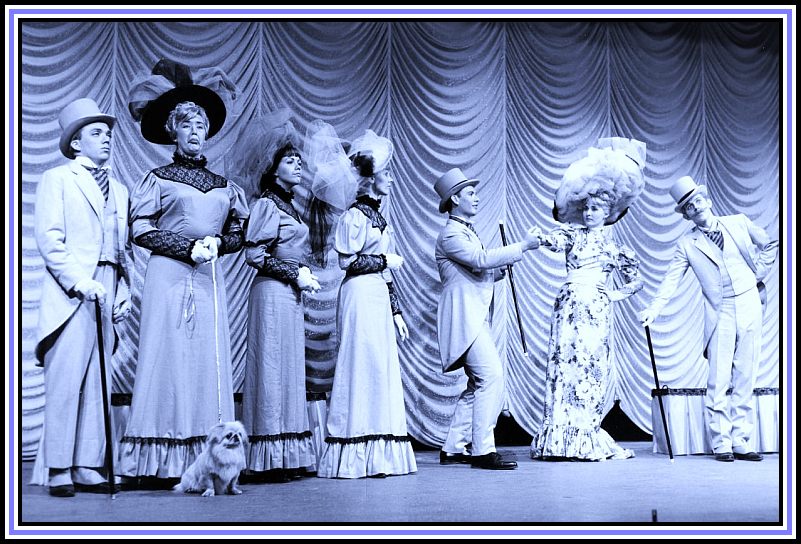 Personally, I prefer the Fashions of Yesteryear despite their being impractical today
-oOo-
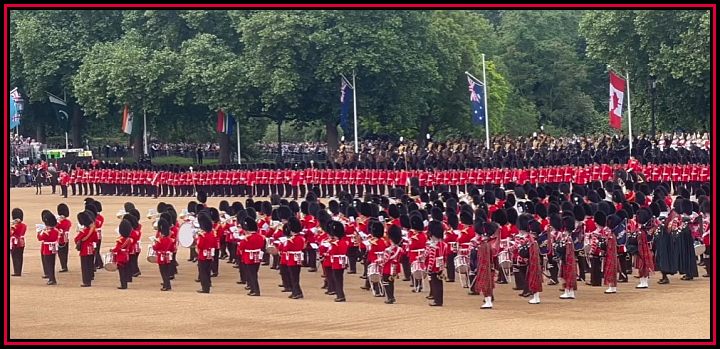 The Massed Bands of the Household Division, 2022
Trooping the Colour is a ceremony that takes place each year on Horse Guards Parade in London by the Regiments of the Household Division to note the Official Birthday of the Monarch. The event is officially known as the Sovereign’s Birthday Parade or the King’s Birthday Parade. At one time, the regimental Colours were a point of rallying point on a battlefield, and here, they are the focal point of the ceremony. Since 1748, the event takes place to mark the official birthday of the Monarch. The actual birthday of King Charles III(1948) is the 14th November.
-oOo-
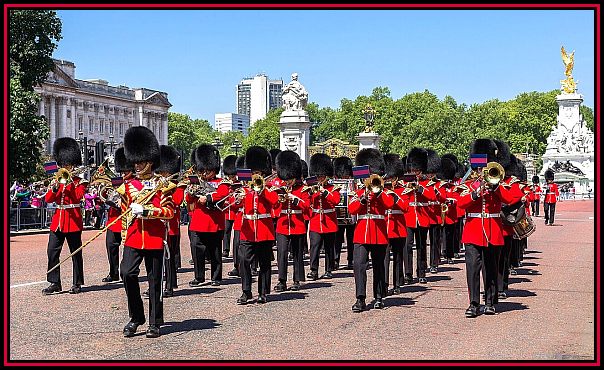 The Band of The Welsh Guards – Photograph by David Liliff
The Band of The Welsh Guards & The Theorchy Male Choir– Men of Harlech
-oOo-
There are five Foot Guards Regiments of The Household Division and these are: The Grenadier Guards, Coldstream Guards, and Irish Guards have Infantry and Light infantry roles, while the Scots Guards and Welsh Guards specialise in Mechanised and light Mechanised Infantry roles. Each year, one regiment is presented with its Colour at the ceremony and then given the right to slowly Troup (i.e., Carry) it through the massed ranks of guards who stand with their weapons presented.
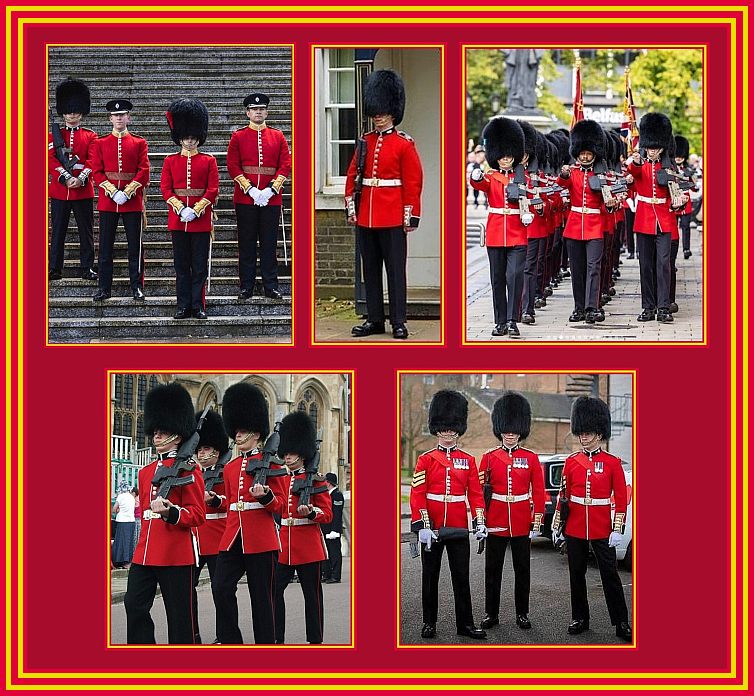 The Five Foot Guards Regiments of The Household Division
Top Row: from Left to Right: Coldstream, Grenadier & Irish Guards
Bottom left: Scots Guards; Bottom Right: Welsh Guards
I hate to admit it, but to my untrained eye, the uniforms of these Guardsmen do not look that different, but I am assured by those with a trained eye that each is unique. I have no reason therefore to doubt them.
-oOo-
A question often posed is do the Guardsmen have to purchase their own ceremonial headdress? The answer is no! They are officially issued and paid for by the Ministry of Defence, and are made of real fur and cost over £2,000.
-oOo-
Prior to the ceremony, upon leaving Buckingham Palace en route to Horse Guards Parade, the Monarch is accompanied by an Escort of Household Cavalry, which consists of the mounted troops of Horse Guards made up of The Life Guards and The Blues and Royals. During the ceremony proper, and following receiving a Royal Salute, the Monarch inspects his troops of the Household Division along with those of the King’s Troop (i.e., Royal Horse Artillery).
-oOo-
The Life Guards is the most senior regiment of the British Army and part of the Household Cavalry together with The Blues and Royals.
The Life Guards were formed from four troops of Horse Guards: the first being raised by Charles II (1630-1685) in 1658, the second in 1659, the third in 1658 and the fourth in 1661, and first saw action during the Third Anglo-Dutch War in 1672. Following this, the first and second troops were disbanded. Following action in numerous wars, the remaining two troops were combined in 1922 and were named The Life Guards in 1928. Towards the end of the First World War, the Guards gave up their horses and the First and Second Battalions, Guards Machine Gun Regiment. During the Second World War, they were assigned to Armoured Reconnaissance and performed their duties in Palestine, Iraq, Iran, Egypt and Italy.
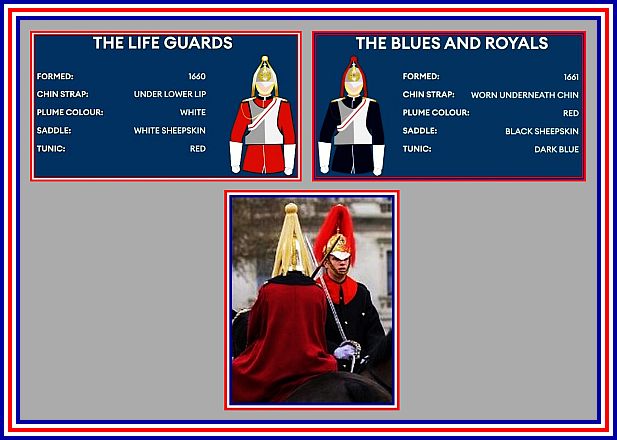
The Life Guards differ from The Blues and Royals in that they wear their chin strap under the lower lip. In 1992, The Life Guards were joined with The Blues and Royals in a Union to form the new Household Cavalry. It is important to note that the two regiments were not amalgamated, but formed two regiments, one for Armoured Reconnaissance, and the other, being mounted, for Ceremonial Duties. As with The Blues and Royals, neither regiment have Sergeants, but have multiple grades of Corporal, with the most senior being the Regimental Corporal Major (i.e.,Warrant Officer Class 1).
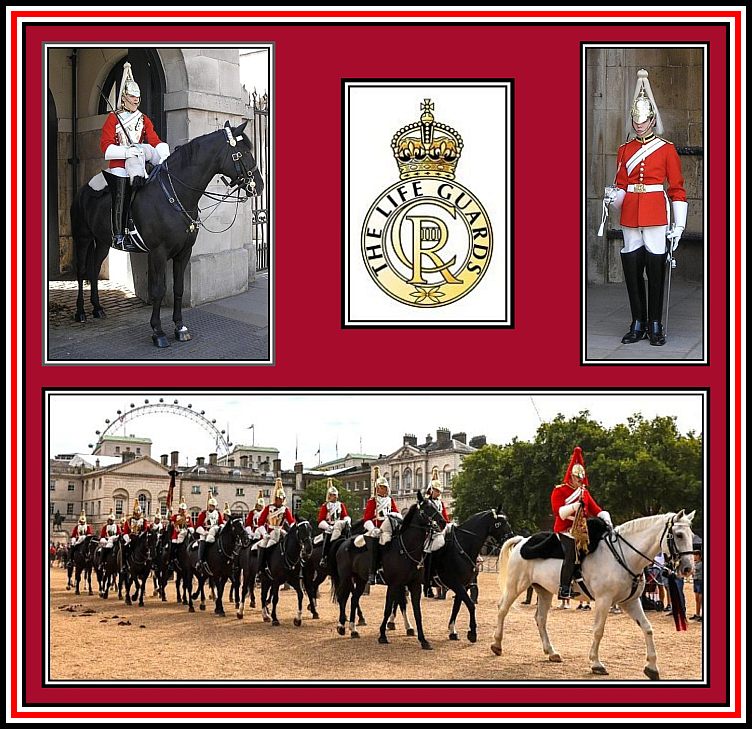 The Life Guards
Centre: The Corp’s Badge
-oOo-
As noted, The Household Cavalry consists of the mounted troops of Horse Guards of The Life Guards and The Blues and Royals.
The Blues and Royals was formed in 1969 following the merger of the Royal Horse Guards, which was known as The Blues or The Oxford Blues, and The Royal Dragoons which was known as The Royals. It is the only regiment known by its nickname and also the only regiment to allow troopers and non-commissioned officers when not wearing headdress to salute an officer. As with The Life Guards, the regiment does not have Sergeants, but levels of Corporals.
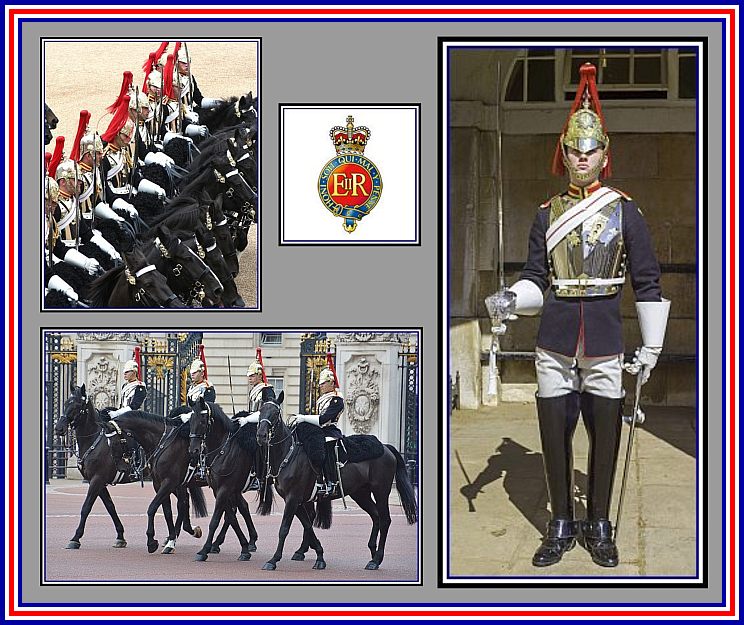 The Blues and Royals
The Blues were raised in 1650 on the orders of Oliver Cromwell (1599-1658) and The Royal Dragoons were formed soon after the Stuart Restoration in 1661. The regiment has served in a number of countries and today its duties are in Reconnaissance, as well as Ceremonial.
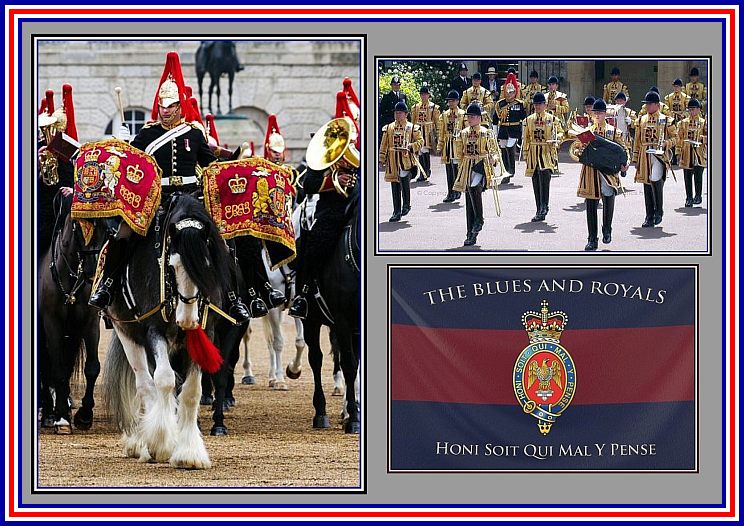 Members of The Mounted Band of The Blues and Royals & The Regimental Flag
The Mounted Band of The Blues and Royals
-oOo-
Four points of note regarding the differences between The Life Guards and The Blues and Royals that are worth emphasising:
- The Blues and Royals is the only regiment in the British Army that allows troopers and non-commissioned officers, when not wearing headdress, to salute an officer;
- both Prince William (1982) and Prince Harry (1984) were members of The Blue and Royals with the rank of Cornet. This rank is originally the lowest grade of Commissioned Officer in a British Cavalry Troop, the modern equivalent being a Second Lieutenant. Although the term is obsolete, it is still used as an internal title of address when referring to a Second Lieutenant within The Blues and Royals;
- the plumage of the helmet of The Blues and Royals is red while that of The Life Guards is white; and
- unlike The Life Guards, The Blues and Royals wear their chin strap under the chin.
-oOo-
The King’s Troop is trained to care for and drive teams of six horses with each team pulling a First World War-era QF 13-Pounder Gun and are mostly ceremonial today.
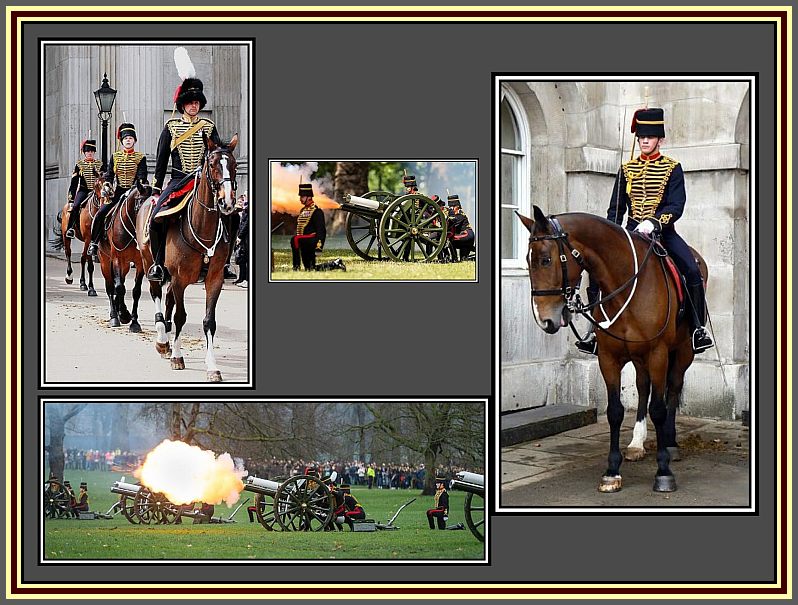 The King’s Troop
The Troop’s duties include the duties of the King’s Life Guard at Horse Guards for one month each year, firing Salutes on royal and state occasions, participation in parades and also to provide the gun carriage and team of black horses for state funerals.
-oOo-
Following the presentation of the Colour to the regiment, the Monarch observes The Slow March-Past (seventy-five steps per minute), where the Colours are lowered by the Foot Guards, the Household Cavalry and the King’s Troop.
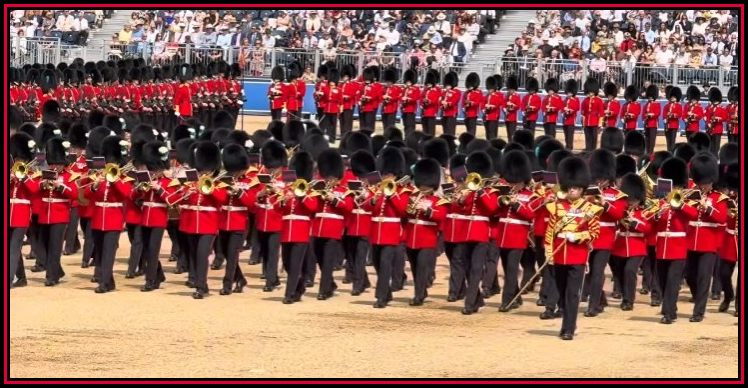
The Band of the Grenadier Guards – The Slow March Past
Music played during The Slow March Past
-oOo-
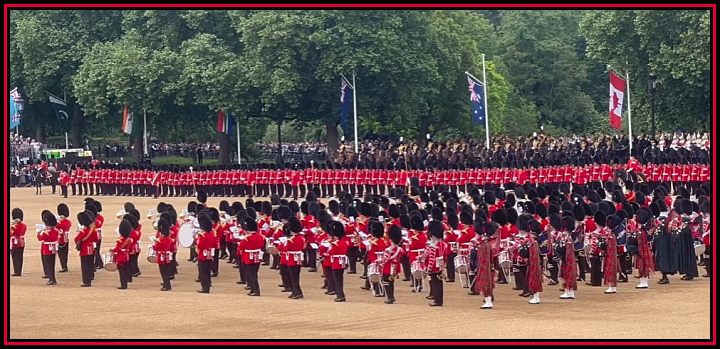
Later, the Monarch observes The Quick March-Past (one hundred & twenty steps per minute) , where now the Colours are held high and allowed to fly. The Monarch will salute the Colours in return.
Music playing during The Quick March Past
-oOo-
The music heard at the Trooping of the Colour is from the Massed bands of the five Foot Guards Regiments of the Household Division and the Mounted Band of the Household Cavalry, together with a Corps of Drums, and Pipers, totaling approximately four hundred musicians.
-oOo-
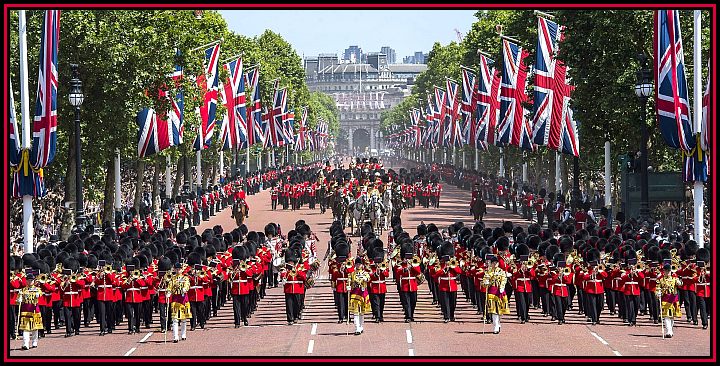 The Monarch returning to Buckingham Palace, 2018 – Photograph by Cpl Stephen Harvey/MOD

Once the ceremony is concluded, the Monarch returns to Buckingham Palace via The Mall and surveys a further march-past from outside the gates. Following a forty-one Gun Salute by the King’s Troop in Green Park, the Royal Family make an appearance on the Palace Balcony for a Royal Air Force fly past.
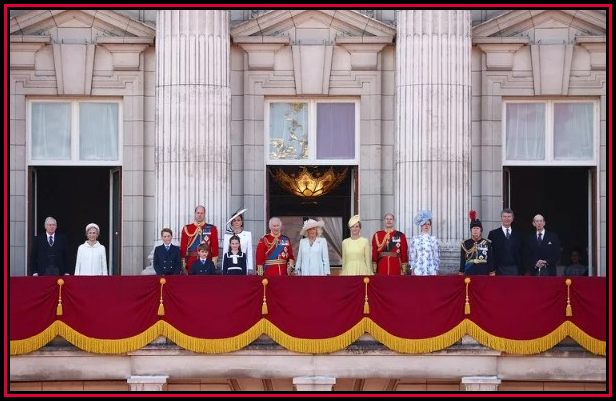 The Royal Family in 2024 – Photograph by HENRY NICHOLLS/AFP via Getty
-oOo-
Queen Elizabeth II (1926-2022) attended The Trooping of the Colour the ceremony every year of her reign except for that of 1955. She rode her horse, Burmese, from 1969 until 1987 when the horse was retired. After that, she attended via a horse-drawn royal state carriage. Burmese died in 1990 and is buried on the grounds of Windsor Castle.
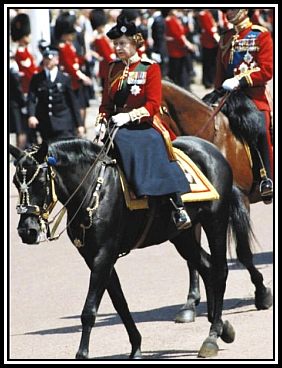 Elizabeth II & Burmese (1968-1990)
The first ceremony Charles III attended as Monarch was in 2023 and he did so on horseback. In 2024, he chose to attend via carriage.
-oOo-

Henley Royal Regatta (or Henley Regatta, since its original name pre-dates Royal patronage) is a Rowing Event held annually on the River Thames as it flows through the town of Henley-on-Thames in the County of Oxfordshire. The Royal Regatta was established on 26th March, 1839 and differs from the three other Regattas rowed over approximately the same course: Henley Women’s Regatta, Henley Masters Regatta and Henley Town and Visitors’ Regatta, each being an entirely separate event.
In 2026, the event was held from Tuesday, June the 30th until Sunday, July the 5th. This year there were 862 entries (a new record for the number) who raced over the classic One-Mile & 550-yard Course (i.e., 2,112 metres) and attracts competitors both from Britain and around the world. The races are head-to-head knock out competitions and raced upstream over the designated course.
-oOo-
The most prestigious event at the Regatta is The Grand Challenge Cup for men’s Eights, which has been awarded since the Regatta was first staged.
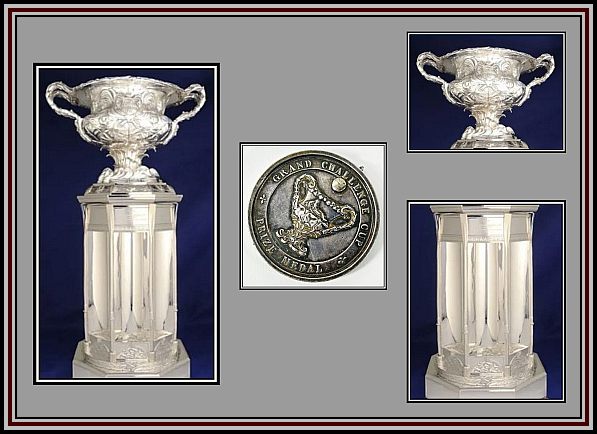 The Grand Challenge Cup & Prize Medal
An Eight is a boat or Racing Shell for eight rowers and is steered by a Coxswain (Cox). The rowers sit in a line and face the Stern (i.e., front). They are placed alternately with four on the Port or Stroke side (rower’s right hand side) and four on the Starboard or Bow side. The Cox steers the boat using a Rudder and is normally seated at the Stern of the boat.
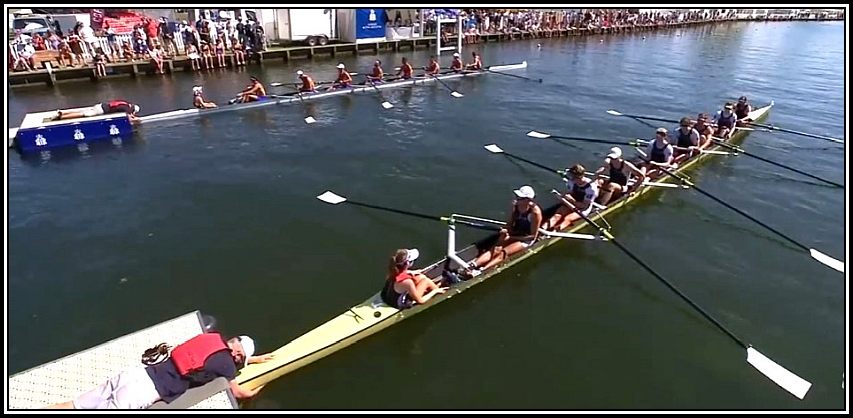 The Start of The Race
A base for the Cup was added in 1896 and extended in 1954 and 1986 and records the names of all winning crews since the inception of the Regatta. The Book of Honour was added as an integral part of the trophy in 1954. In 1964, the winning Harvard Crew of 1914 presented the Regatta with a new Cup since the original was showing signs of wear and is identical to the original one and now continues to be used as the trophy.
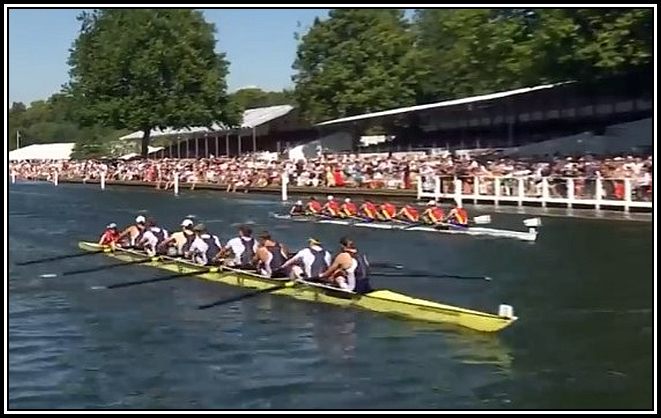 The Finish of The Race
-oOo-
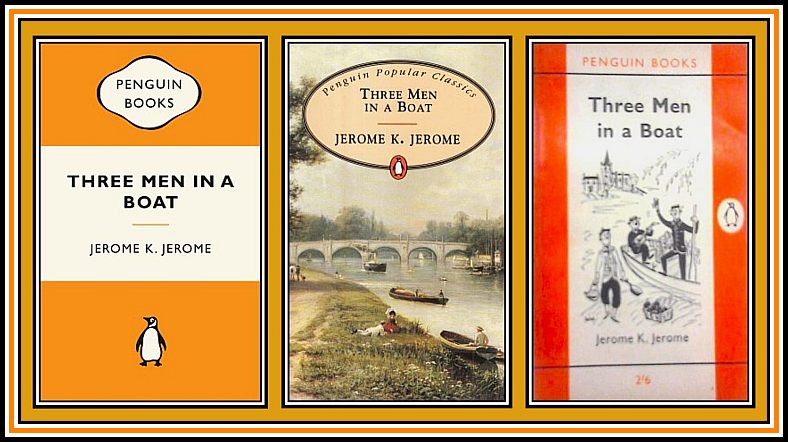 Penguin Books Editions
One of the funniest books that I ever read is Three Men in Boat (to say nothing of the Dog) by Jerome K. Jerome (1857-1927) which was published in 1889. The book is based on a boating trip, using a Thames camping skiff, taken by the author and two of his friends from Kingston-on-Thames to Oxford on the River Thames. During the trip the three friends get into all kinds of scrapes, which caused the book to seen a comic piece of literature rather than a travel book, which had been the intention of the author. The book was poorly received by the critics, but became immensely popular with the general public. The book sold over one million copies in the U.S.A., but Mr. Jerome received no royalties from American sales since there was no British copyright laws applicable to the U.S.A.
Apparently there was no dog on the original trip, but the author states that since it is an English story, a dog is involved if only in our minds and was named Montmorency. I like to think of the dog as being a Jack Russell Terrier since such dogs are always ready for fun and enjoy making mischief. One needs to be young and very energetic to own such a dog, and sadly, alas gone are such days for me!
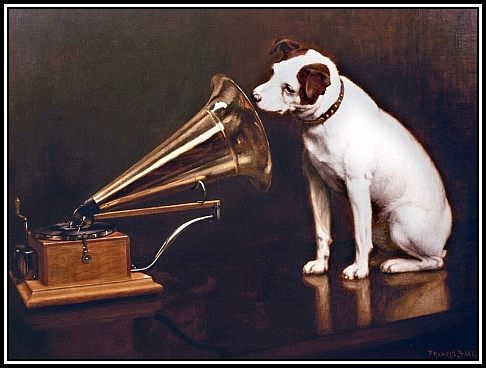 Nipper (1884-1895) – Identified Trademark of both HMV & RCA
-oOo-
I was introduced to this book by one of the many English Teachers that I had. I was about thirteen years old at the time and very, very Anti-School and definitely not especially interested in learning – there were too many distractions to be bothering with the boring doings offered at school! However, for some unknown reason, we had to take turns in reading passages from this book aloud to the class during our horrible English classes. Surprisingly, I found myself paying attention to the readings and finding that they had peaked my interest! I remember that I soon bought a copy of the book, which I would still own had not for someone who stole it from me!
I found that the funniest of the adventures of the friends took place at the Hampton Court Maze and at the Henley Regatta. I will not go into detail of these events so as not to spoil them for the reader should they wish to read the book.
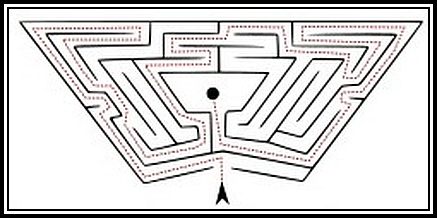 The Maze – showing its solution
In 1956, the book was filmed for the second time, and I remember that it did not disappoint, as my two favourite events were well represented. The dog was excellent too!
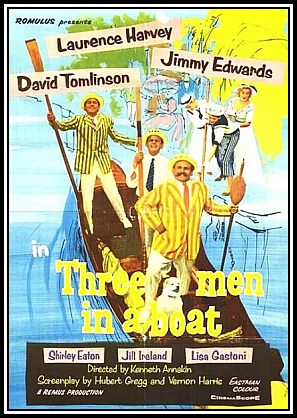 The Poster advertising the 1956 version of the film
-oOo-

The Glastonbury Festival is a major music and contemporary Performing Arts (including dance, comedy, theatre, circus, and cabaret). The Festival is held near Pilton, Somerset. It takes place on 1,500 acres of farmland and is attended by at least 200,000 people and often more and is held over a five-day period towards the end of June. Most of the staff are unpaid volunteers and help the festival to raise millions of pounds for charity organisations.
The first Festival was held in 1970 and was hosted by Michael Eavis on Saturday, 19th September, 1970 and attended by 1,500 people and tickets who paid one pound or less with T. Rex (erstwhile Tyrannosaurus Rex; i.e., the animal was Tyrannosaurus rex).
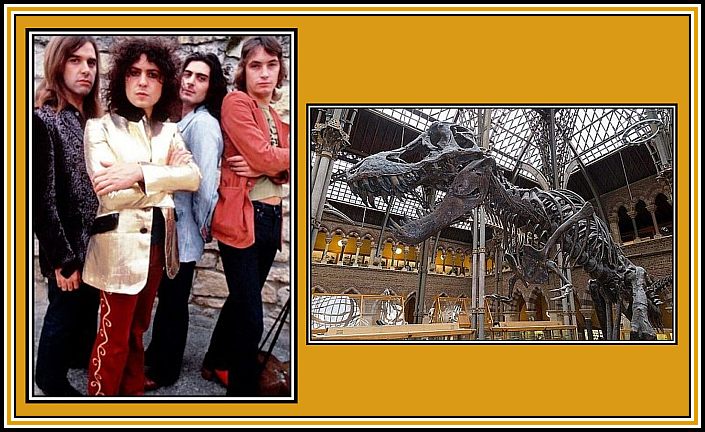 Left: T. Rex; Right: Tyrannosaurus rex
T. Rex – One Inch Rock (1968; From the Acoustic Years)
T . Rex – Get It On (1971; From the Electric Years)
The last Festival was held in 2025 and the entry cost was a great deal more (£373.50). There was no Festival in 2026 to allow the land to lay fallow.
-oOo-
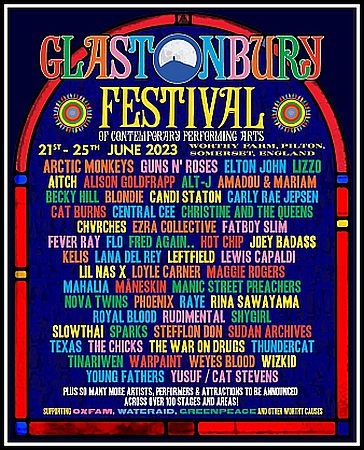
The Festival was held intermittently from 1970 until 1981 and has been held most years since, except for fallow years , which were intended to occur at five-year intervals to give the land, the local population and organisers a rest period. The 2001 Festival was cancelled as a result of a foot-and-mouth disease outbreak and those 2020 and 2021 Festivals were cancelled due to the COVID-19 Pandemic.
-oOo-
Over the years, the number of acts has grown that have performed at the Festival and just about anybody who is, or was, anybody has appeared on the Festival’s stages including an appearance by the 14th Dalai Lama.
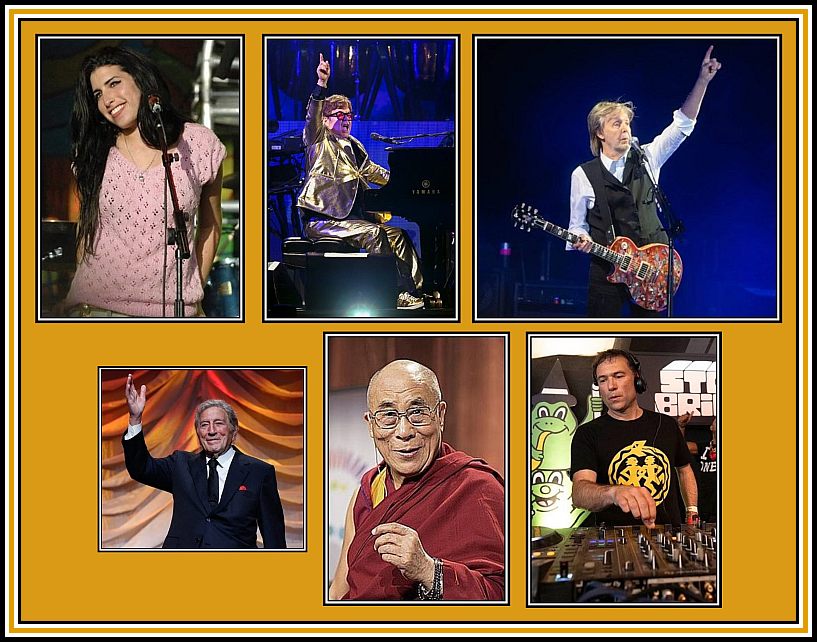 Lower Right: Ros Atkins (1974) – For those readers who do not watch BBC World News & other channels, Mr. Atkins is a presenter and analysis editor on the television channel,
as well as being a musician
-oOo-

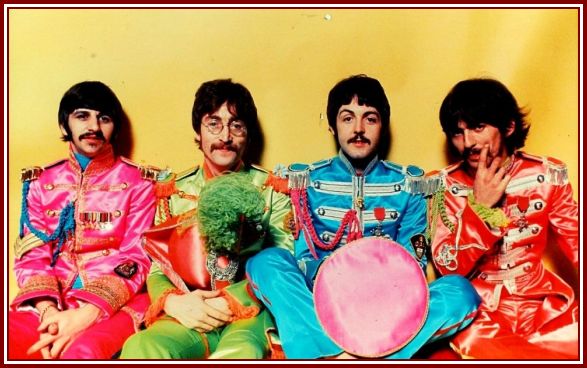
Global Beatles Day takes place on the 25th June and has done so since 2009. The concept of such a day originated with Ms Faith Cohen, a fan, as a thank you and love-letter to the group, as a thank you to them for their artistic achievements and cultural impact. There is no formal celebration of The Day, but one is encouraged to listen to their music and share it with others.
All You Need is Love – First performed by The Beatles on the 25th June, 1967, during a live broadcast from Abbey Road Studios in London, as part of the BBC‘s Our World programme and seen in twenty countries by ~four-hundred million viewers
-oooOooo-
The FIFA Men’s Football World Cup was held between the 11th June and the 19th July. I will be writing about this event later.
-oooOooo-
Finally I would like to add a note of a very special friend of mine that I was at University with while doing research towards my doctorate. She was born on the 13th June, 1942 and sadly passed away all too soon in 1990.
Aleha hashalom (Blessed is the true judge)
-oooOooo-
—oooOooo—
This was such a joyful tale to read, so full of celebration and tradition! I loved all the Royal Ascot fashion and was fascinated by its evolution over the years. Your explanation of Trooping the Colour and the various guards and regiments was a much-needed master class for me. I’ve never been able to sort out the distinctions on my own and really appreciate this guide. I’ve bookmarked the page for future reference.
I was so excited to learn more about “Three Men in a Boat,” because it was one of my favorite book club reading experiences! We read it in one of my library classics groups, and everyone adored it. I didn’t think to check for movie adaptations, so thanks for the heads up
I think this tale had some of the best musical selections ever. I got a little nostalgic listening to T. Rex’s “Get It On,” as it was like a hymn during my high school years. Wow, who knew that June was such a momentous month!