THE CHRONICLES OF
HER GRACE THE DUCHESS
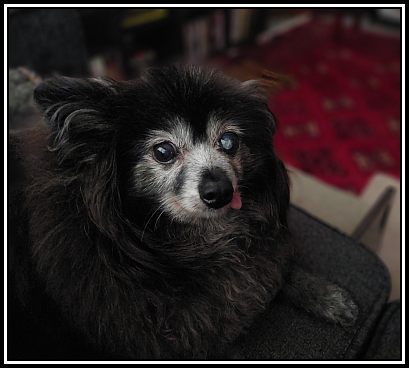 Her Grace The Duchess
Joe Cocker (1944-2014) – You are so Beautiful to Me – recorded in 1974
Written by Billy Preston (1946-2006) and Bruce Fisher (1954)
-oOo-
I have spoken to a number of dog owners over time and many state that their dog enjoyed certain types of music while others said that their dogs showed no to little interest. One thing that I know for sure was that Casanova/Puppy had definite musical likes and dislikes for if he did not like some piece of music, he would walk out of the room!
Of course I am prepared to agree that his musical tastes, and now those of Her Grace The Duchess, mimic my own since both dogs obviously had no choice in deciding what we listened to!
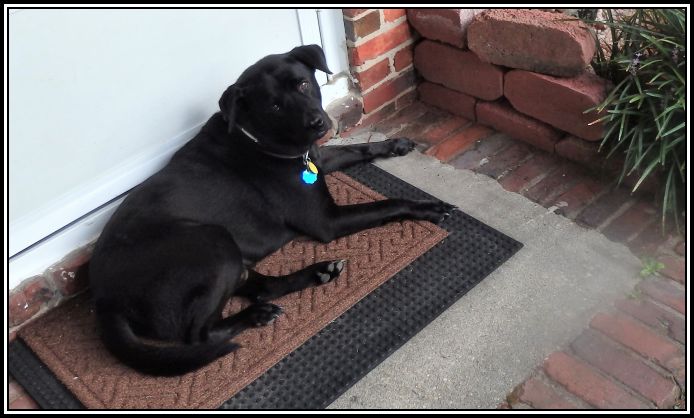 One of the rare occasions when Casanova/Puppy would allow his picture to be taken!
-oOo-
So what genres of music exactly was Casanova/Puppy subjected to? The answer is a wide variety. But firstly, how did he come to hear of these genres? To answer this, I will need to meander along ANOTHER fork (or perhaps several forks in the road) and consider my own musical influences that have helped develop my tastes prior to meeting Casanova/Puppy.
-oOo-
SO WHICH MUSICAL GENTRES DID CASANOVA/PUPPY HEAR?
I like to think that my taste in music eclectic. I was brought up surrounded by music. My parents enjoyed pieces from a wide range of musical genres. They were both singers and my father also played the piano and we often used to have musical evenings when I was young. Both my parents had powerful voices and my mother loved to sing the songs of Sophie Tucker (1886-1966) while my father was more sedate and sang songs of Richard Tauber (1891-1948), John McCormack (1884-1945) and Mario Lanza (1921-1959). I also sang in those days, but I doubt if I fully understood the sentiments of the songs I attempted to sing.
Sophie Tucker – Some of These Days – Recorded in 1926
Richard Tauber – My Heart and I – From the Operetta, Old Chelsea
John McCormack – Keep The Home-Fires Burning – Written in 1914 & Recorded in 1915
Written in 1914 by Ivor Novello (1893-1951) & Lena Guilbert Ford (1870-1918)
Mario Lanza – Be My Love – From the film The Toast of New Orleans (1950)
Written by Sammy Cahn (1913-1993) & Nicholas Brodszky (1905-1958)
-oOo-
Thanks to my parents and our musical evenings, I heard many songs from the Music Hall, Operetta and even some Opera at an early age.
-oOo-
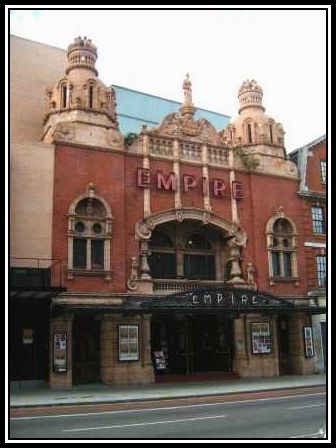
We went to the Hackney Empire often when I was a child and I was fortunate enough to see a number of famous Music Hall Artists towards the end of their careers along with some popular artists of the time.
My mother was distantly related to one of the great Music Hall Artists, Miss Marie Lloyd (1870-1922). She was world famous, and popularised a number of songs that are still known today.
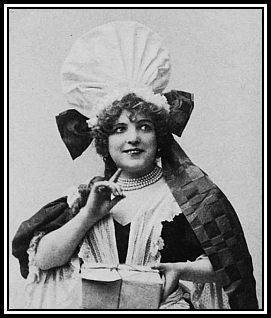
Marie Lloyd – A Little of What You a Fancy Does You Good! (Released in 1916)
Written in 1915 by George Arthurs (1875-1944) and Fred W. Leigh (1871-1924)
-oOo-
Between 1953 and 1983, the BBC presented 245 one-hour episodes of a programme called The Good Old Days. The programme recreated An Evening at the Music Hall and was presented from the Leeds City Variety.
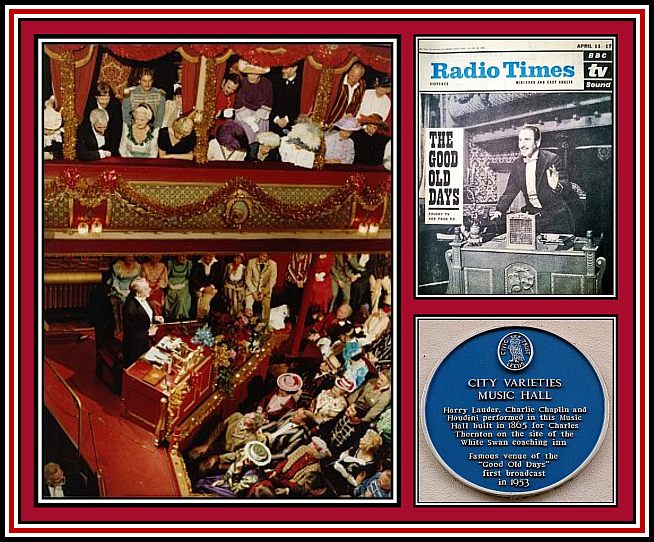
The evening’s events would be overseen with much verve and gusto by the brilliantly talented Leonard Sachs (1909-1990) who would amuse both audience and television viewers alike with his wit and charm, as he astounded the audience (and viewers) in true vintage style, by his portrayal of the production’s Master of Ceremonies. I recall the programme was worth watching just to listen to the wonderful use of the English language by Mr. Sachs!
During the presentation, various acts would recreate old-style entertainment for your delight, as the Master of Ceremonies would say. One such act would always be a female singer who would be generally be dressed in an exaggerated gown together with a large hat ordained with masses of multi-coloured ostrich feathers. She would lead the audience, also dressed in period costume, in a singalong consisting of a number of Edwardian and Victorian tunes. Everyone would join in and sing heartily with her and have a great time in doing so. I remember that my parents would always sing along.
This programme may sound perhaps trite or corny, but I can assure the reader that it was neither; just plain and simple entertainment!
-oOo-
THE INFLUENCE OF THEATRE
Living in London, as I did in my childhood and early youth, I was taken often to the West End Theatre, where I was fortunate enough to see a number musical and straight plays. I remember the first musical that I saw, Oklahoma! It had recently been transferred to the Stoll Theatre on Kingsway where I also got to see The Festival Ballet with Anton Dolin (1904-1983) as the principal male dancer in a production of Where The Rainbow Ends.
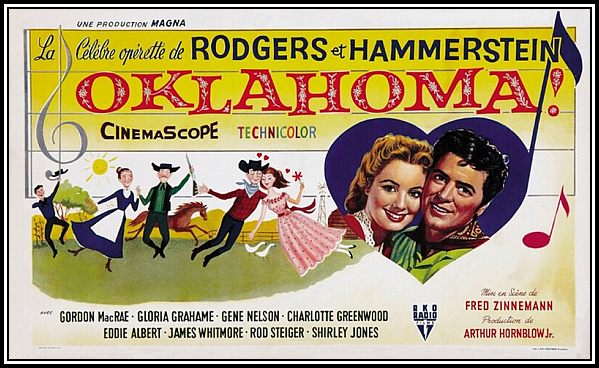
Oklahoma! – From the film (1955) of the stage production (1943)
Written by Richard Rodgers (1902-1979) & Oscar Hammerstein II (1895-1960)
I also remember seeing Kiss Me Kate (1951), Call Me Madam (1952) and Guys and Dolls (1953) at the Coliseum Theatre on St. Martin’s Lane. I saw other West End Musicals, but sadly I can not recall the titles at this time. Unfortunately, the only straight play that I remember seeing was Young Elizabeth at the Criterion Theatre in Piccadilly Circus with Mary Morris (1915-1988). However, I do remember visiting the Old Vic Theatre and seeing a number of Shakespeare plays.
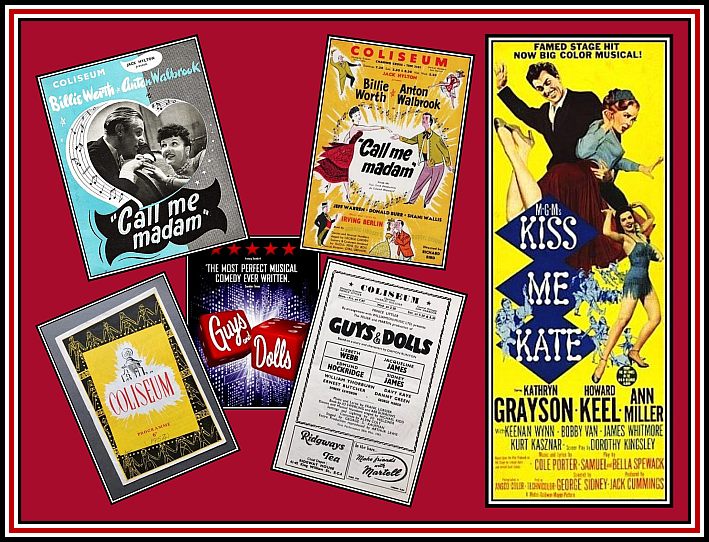 West End Theatre Posters
I also saw a number of Pantomimes. We always saw the Pantomime presented at the Hackney Empire. These productions were famous for being both lavish and well produced ……….. and, oh yes, great fun for all concerned! I also saw other Pantomimes over my childhood: Snow White at the Victoria Palace Theatre, Goody Two Shoes at the Casino (now the Prince Edward) Theatre, which had a spectacular waterfall and fountain display; and one at the Prince’s Theatre (now The Shaftsbury) whose title I can not recall at present. Perhaps the most splendid Pantomimes beside those of the Hackney Empire were those presented at the London Palladium. I am glad to see that the current owners of the Theatre have now revived this tradition great success.
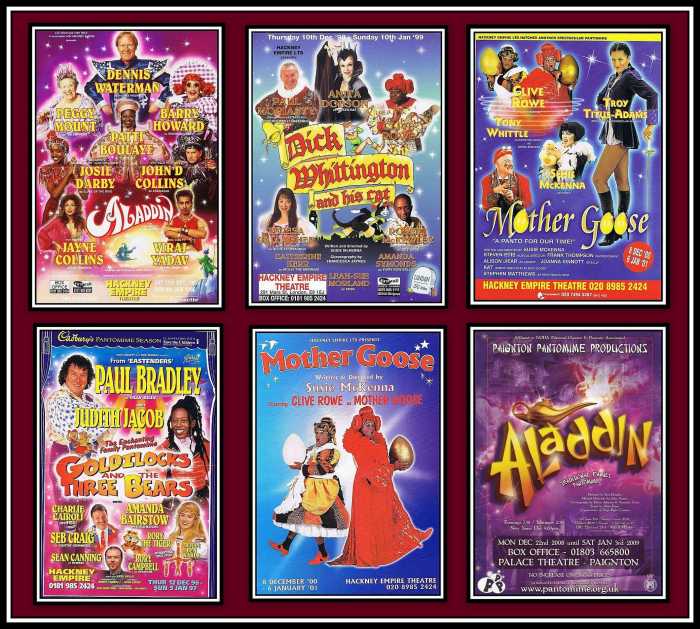 Hackney Empire Pantomime Posters
-oOo-
As I grew older, I grew less enamored with these genres and became more interested in Jazz along with Classical Music. I did continue to enjoy Big Band Music, some show tunes and some Modern Popular Music.
-oOo-
THE INFLUENCE OF BIG BANDS
What do I mean by Modern Music (i.e., popular)? At this time, Big Bands were still popular either for listening to or dancing to in Dance Halls or Palais-de-Dances (the Pally). My father enjoyed Brass Bands and also Big Bands, and I recall going to the Hackney Empire to see and hear Ted Heath (1902-1969) and His Music and Joe Loss (1909-1990) and His Band. My father was not impressed by the Joe Loss Band since it lacked violins. He found his sound too loud!
Ted Heath & His Music – Hot Toddy – recorded in 1953
Joe Loss & His Band – Sucu Sucu – recorded in 1961
Lou Busch (1910-1979) & His Band – Zambesi – recorded in 1955
-oOo-
My favourite Big Band was Harry Roy (1900-1971) & His Band/Orchestra. I especially enjoyed his version of Twelve Street Rag which was written by Euday L. Bowman in 1914 and recorded in 1933.
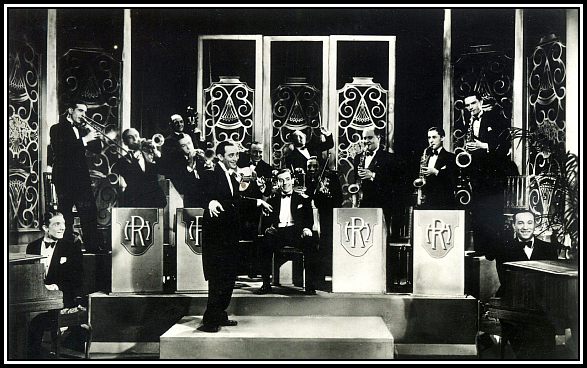
Harry Roy & His Orchestra (1933) – Twelve Street Rag
-oOo-
In the early 1950s, The BBC aired the programme Come Dancing on television on a Monday night for a number of years with an occasional interval or two (1950-1998). The programme presented exhibition and competition Ballroom Dancing by individual couples or else in formation teams. The competitions were hotly pursued, as many of the dancers taught dancing at various dancing schools around the country and therefore winning made for great publicity should a couple or formation team win here.
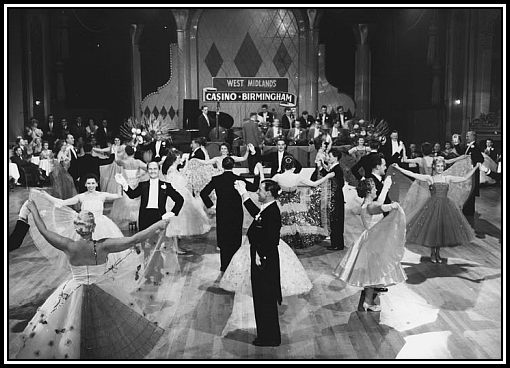 The First Episode of Come Dancing was presented on Friday, 29th September, 1950
from the Lyceum Ballroom London with Harry Roy & His Band providing the music
The men wore dinner suits with long tail coats with the couple’s number pinned to the back, but it was the women who gained the most attention from the audience since they wore elaborate dresses with billowing skirts. The couples twirled and whorled about the dance floor and most viewers always had their favourite dancers. The programme was very popular with all ages. At its height, seemingly it had ten million viewers.
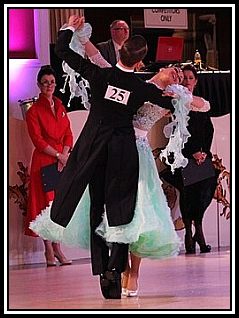
What I enjoyed most about this programme was the ending! The comperes would finish up by eagerly inviting the audience around the ballroom floor to COME DANCING! Upon this suggestion, the audience would move en mass and at top speed onto the floor causing it to quickly become jammed with people attempting to dance. I found this hilarious since no one was able to move, let alone dance and soon the crowd was stuck and just hovered in place!
-oOo-
Come Dancing – The Kinks – Recorded in 1983
-oOo-
This programme, of course, is the forerunner of Strictly Come Dancing (2004) /Dancing with the Stars (2005). This incarnation does not rely on the old format, but rather on so-called celebrities partnered with professional dancers and has proved to be immensely popular with viewers and has been licensed in sixty countries.
-oOo-
THE BBC was very STAID at this time and was not ready for the societal changes that were about to come. In fact, it resisted the changing tastes of the majority of the British public until the mid-1960’s when the whole system was revamped.
-oOo-
THE BBC – CHILDREN’S HOUR
What was there on BBC Radio at this time that was specifically aimed at children? They weren’t considered a market to be tapped at that time and so not considered especially important.
When I was very young, children’s programming (no one employed the word KIDS at the BBC at that time!) was very much under the control of Derek McCulloch (1897-1967) who was known as Uncle Mac. Each afternoon, once the school day had ended, the BBC presented Children’s Hour (1922-1964). Mr. McCulloch took full control of its programming in 1933 and remained in charge until 1951. Some of the programmes on offer were reasonable while others were not. I enjoyed the Regional Quiz and was greatly amused by some of the short playlets offered. Of interest were Norman & Henry Bones, The Boy Detectives (1943-1965) and Toytown (written by S.G. Hume Beaman (1887-1932).
I was especially amused by Toytown, as I liked the bleating sounds made by one of the central characters, Larry The Lamb who incidentally was played by Mr. McCulloch. The reader can catch a bleat or two in the following recording of the programme’s theme music:
The Toytown Theme
-oOo-
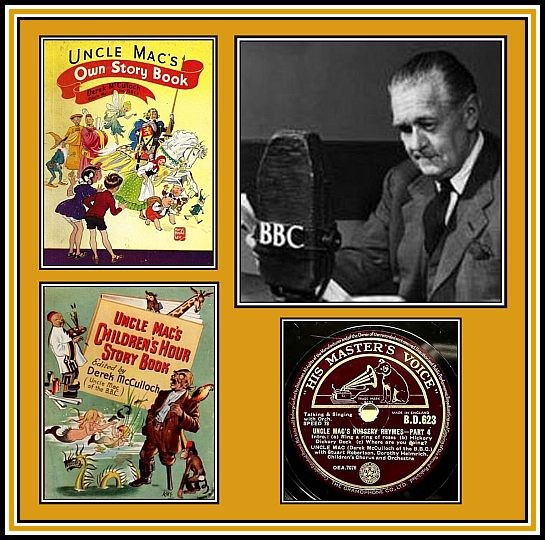 Derek McCulloch – Uncle Mac (Top Left)
-oOo-
Tales of Toytown – The Great Toytown War
First Broadcast 22nd October, 1962 on the BBC’s Home Service as part of Children’s Hour
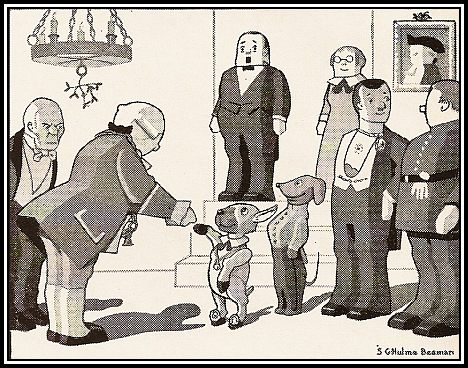 From left to right: Mr. Growser, the Mayor, the Mayor of Arkville’s Butler,
Larry the Lamb, Dennis the Dachshund, Mrs. Goose, Captain Higgins & Ernest the Policeman
Illustration by S.G. Hume Beaman
-oOo-
In 1954, Mr. McCulloch began to present BBC’s Children’s Favourites (1954-1982), a musical request programme, airing on a Saturday morning and did so for eleven years. I remember that it was a very staid programme during his time. He evidently had ideas of WHAT young school children should be listening to. Here are some examples:
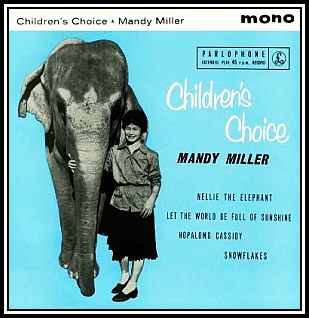
Mandy Miller – (1944) – Nellie the Elephant
The recording was produced in 1956 by George Martin (1926-2016)
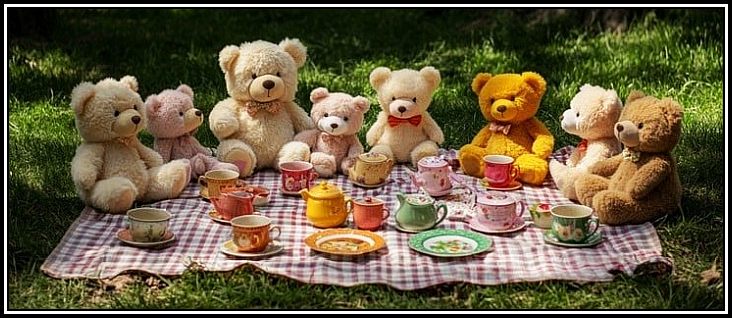
The Teddy Bears’ Picnic – recorded in 1932 by Henry Hall (1898-1998) & His Orchestra
The melody was written 1907 by John Walter Bratton (1867-1947)
and the lyrics were added in 1932 by Jimmy Kennedy (1902-1984)
All very nice, but not especially exciting especially since at this time the world was on the cusp of changing with the advent of Rock ‘n’ Roll!
Here is a particular happening that happened on a Saturday morning in 1957 when a listener requested Uncle Mac to play School Days by Chuck Berry (1926-2017). I remember that my ears pricked up as I was certain he was unaware of this song. Well, about midway through, Uncle Mac interrupted the music and cut it off. He sounded very flustered as he explained his action by saying WELL THAT IS QUITE ENOUGH OF THAT! This was evidently the view of him and of the BBC at that time!I remember laughing so much!
Chuck Berry – School Days
Not to be totally mean and unfair to poor Old Uncle Mac, there was one thing, besides the bleating, that I did like about him and this was the manner he chose to end his programmes. He would say GOOD NIGHT CHILDREN ……….. EVERYWHERE. This simple remark apparently brought great comfort to children especially during the Second World War who had been evacuated from their homes and were separated from their parents.
-oOo-
MORE TO COME
—oooOooo—
Click here to GO to:
THE CHRONICLES OF HER GRACE THE DUCHESS
DO DOGS ENJOY MUSIC?
PART 3 – A SEISMIC EVENT
—oooOooo—
Charles, that was a total revelation to me! I learned so much and enjoyed immersing myself in the music. What a rich musical upbringing you had! And you highlighted so many appealing options for children, especially for animal lovers like me. I’m envious of all the live performances you attended. My best childhood experience with music was watching the TV series, Young People’s Concerts:
https://en.wikipedia.org/wiki/Young_People%27s_Concerts
I really enjoyed the mentionof the BBC’s Children’s Hour. It took me back to my childhood where in Australia we had a parallel show called the Children’s Session – even including someone called Mac! It included the Argonaut’s Club which featured music, art and books with famous people assigned as presenters – this included Linley Evans as the Music Man. Guests on the music section included other well-known people such as Richard Bonynge and Barry Tuckwell.
Each child who joined was assigned to a ship and given a name from Greek mythology – I was Eurysthenes 42. Members could send in art, music or literary work which they had created and we received points for them in pursuit of goals such as the Golden Fleece. Membership was huge and, we know now, included such well-known celebrities like comedian Barry Humphries, artist Ken Done and singer Joan Sutherland.
It was a wonderful hour of entertainment for lively young minds!